Recap of our Business Breakfast with Frontify

We look back with satisfaction and motivation on our first exclusive Business Breakfast, which we organized together with our partner Frontify. In a relaxed atmosphere, six experts – Anne Brüning, Holger Zeh, Tina Mushak, Matti Wachholz-Hausmann, Antonia Paul and German Schulz – discussed the topic of brand management and talked about their experiences and challenges in this area. We have summarized the highlights for you to read in this article.

Marco Spies and Katja Wenger opened with a fascinating presentation on “Spherical Brands”, an innovative approach to developing sustainable brand strategies. You can read more about this at thesphericalbrand.com.

In the panel discussion that followed, our six experts spoke on a variety of topics, such as the role of the brand manager as friend and helper, rebranding experiences, challenges in brand management and the use of creativity and agility.

What everyone agreed on: Brand management should never be perceived as the brand police, but more as a helper, coach, advisor or supporter.

Tina from BASF reported on how she manages to communicate the brand to around 100,000 employees with just a small team of brand managers. The so-called “brand champions” play a central role here, communicating the brands and their guidelines to the respective teams and being available to answer questions. Using messaging channels such as Facebook groups, the team offers a solution for sharing updates and responding to questions and concerns.

Holger from Deutsche Welle spoke about the importance of being responsive and adaptable, especially when it comes to news, social media and fake news. For Holger and his team, Frontify Publisher is the ideal tool to make processes simpler, more efficient and more trustworthy.

The ability to react quickly is also very important for German from VfL Wolfsburg, and not just on the pitch. Trust and loyalty are very important in soccer, and fans in particular expect their favorite club to have a high recognition value.

Anne from the Bundesdruckerei reported on how they have created a brand family of seven different brands, in which each one has its own identity and yet a family affiliation can be recognized among them.

Matti from Cornelsen talked about how important it is for his design team to ensure a high return on investment through brand management and long-term strategies, above all to ensure the company’s performance.

Antonia from Frontify emphasized the advantages of giving the responsible team a face and assigning clear roles in the brand management team. These roles can also be mirrored accordingly in a brand management portal such as Frontify and thus create a framework in which everyone can live out their creative potential.

The topic of creativity vs. control was discussed at length. Some ensure the creativity of their employees through best practices and clear communication, others emphasize that creativity sometimes needs to be controlled rather than encouraged in order to maintain brand consistency. Matti from Cornelsen is more concerned with creating a “tone of voice as a recipe”. According to Tina, it’s important not to dismiss employees’ ideas out of hand, but to appreciate that they are thinking while you communicate how and why an idea might need some tweaking.

We would like to thank all the panelists and participants who took part in the discussion. Also many thanks to our partners at Frontify for making this event possible!

Not enough info just yet? Stay up to date with our newsletter and sign up here.

Meet the motos–Jasmin Cziborra

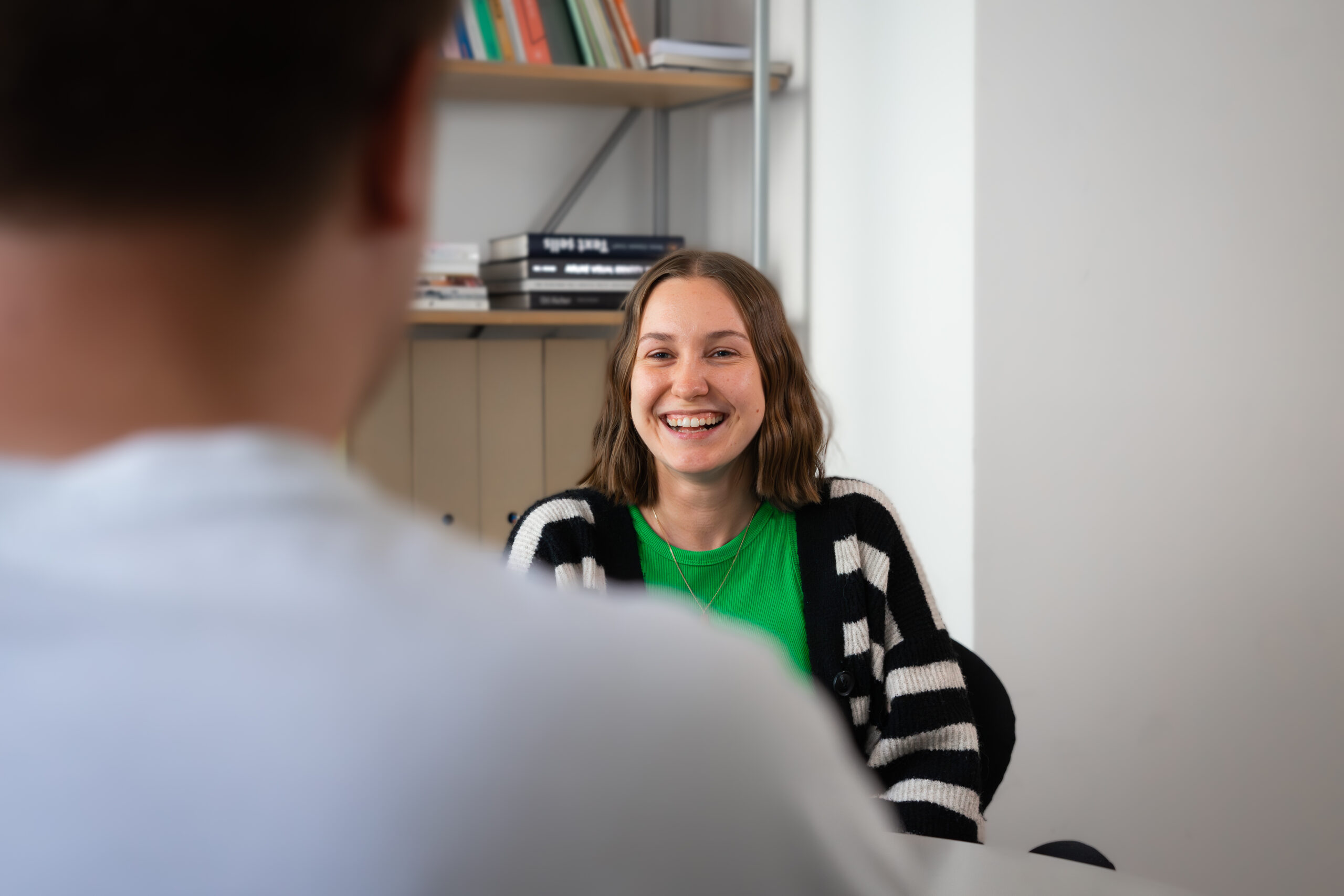
In our “Meet the Motos” series, we introduce you to the brilliant minds behind the think moto team. Today we talked to Jasmin Cziborra. She is a user experience designer and speaks about her work at think moto.

👋 Hi Jasmin! It’s wonderful to have you with us. Can you tell us a bit about yourself?

Hello! I am Jasmin, 25-year-old UX designer here at think moto. I started as an intern and working student at think moto and have now been permanently employed for about 2 years. I was born and raised in Saarland. For my studies, I moved to Schwäbisch Gmünd near Stuttgart, where I studied interaction design at the Hochschule für Gestaltung (University of Design). During my internship, I fell in love with Berlin and decided to move here. 

Your path to think moto began with an internship. How did you discover the agency and what inspired you to join our team?

That was in the fourth semester of my studies. At that time, I was studying interaction design in Schwäbisch Gmünd and was looking for an internship. During this search, a friend recommended the book Branded Interactions to me. I quickly realized that the authors were running an agency. On the think moto website, I then saw that they were looking for UX/UI interns and I applied immediately. The rest is history. 

As a UX designer, what kinds of projects do you typically work on? 

Actually, I am working here at think moto in a hybrid role. I am a UX designer, but I operate at the intersection between strategy and visual design. I take the concepts from strategy and translate them into concrete concepts for websites or chatbots. My outputs are usually wireframes and descriptions for interaction behavior, which I then pass on to the visual design team. I have also been involved in conversational design projects for the design of chatbots. Overall, I enjoy moving between strategy and concept, understanding the essence of a brand, and then translating that into a concept.

You mentioned that the team is an essential part for you. How would you describe the think moto team dynamic?

A harmonious team culture is just as important to me as the projects and was crucial for my decision to work at think moto. We support each other, appreciate feedback from others, and deal openly with criticism. It’s nice that we can interact so openly, have a beer together after work or play games. We also regularly hold smaller team events, which I personally really enjoy.

What makes think moto stand out for you, besides the good atmosphere?

For me, what distinguishes think moto, in addition to the pleasant atmosphere, is primarily the diversity of projects. We collaborate with a wide range of industries, starting from small companies to very large ones. Our projects are diverse, and we always tailor our process to the clients and their needs. I also like that think moto places great emphasis on sustainability. Everything we develop follows the principle of being smart, simple, and sustainable.

Outside of work, do you also spend your free time with creative activities?

Absolutely! I like to explore the world through my lens. I enjoy photography and often film in my everyday life. I always carry a small camera with me that can record 4K videos. At the end of the year, I then edit a small annual review. I also like sharing these videos with friends and family.

Thanks for sharing your journey with us, Jasmin. It’s been a pleasure learning about you and your work at think moto.

Tone of Voice—How a Brand Sounds and Speaks: A Successful Brand Personality Always Has a Distinctive Tone of Voice

—Den Artikel gibt es hier auch auf Deutsch

Brands are successful if they are recognizable and provide outstanding user experiences at all touch points. Be it website, social media, point of sale, marketing or virtual assistant—only a clearly defined brand personality ensures a consistent and unique encounter between brand and user at all times. This always includes the tone of voice.

The tone of voice defines how we speak and write as a brand. Through the tone of voice, the brand’s personality becomes verbally tangible. So it’s not about what we say or who we talk to—but how.

Since the tone of voice is never separate from the brand, it is essential to first define the brand personality.

Discovery_Workshop
What would the brand be like as a person? One of the questions we ask in the discovery workshop

Uncover the Brand in the Discovery Workshop

If the brand was a person, how would it behave and be perceived by others? This is one of the crucial questions we regularly ask in our discovery workshops. Later, in the define phase, we reflect the insights gained this way by writing a prose text about the brand, assigning it the behavioral attributes contained therein. 

In a next step, we group them into clusters and select the strongest attribute from each. From these key attributes, we derive the brand filters that we use to align look-and-feel, user guidance, and tone of voice. The twelve archetypes serve as further orientation because they have been linked to emotions and characteristics for generations. They are therefore useful when it comes to defining the role of a brand—in the market, towards competitors and, above all, towards customers.

Brand Archetype Card Deck by think moto
Archetype Card Deck by think moto

The Linguistic Dimension

In the discovery workshop, we also have the participants define an initial framework for the tone of voice. Five dimensions serve as guiding principles for determining the respective degree of seriousness, formality, emotionality, approachability, and the level of deference to the brand or product. This framework provides an initial feel for the language style. When developing the brand strategy, we later check whether it is congruent with the brand filters and readjust if necessary.

Taking a Refined Approach

Let’s assume that a brand is primarily empowering, smart, and sophisticated as a person—how would these characteristics express themselves in writing and speaking? We specify this using the brand filters in the language principles.

For example, a sophisticated tone of voice means that we communicate eloquently, with our speech fluid and full of elegance. This way, we emphasize the premium character of the brand, but do so in such a nonchalant way that it never comes across as showy.

We then clarify how these language principles affect sentence structure and word choice in particular and illustrate this with the help of concrete examples. To do this, it is a good idea to run the customer’s existing texts through the defined language filters, rephrase them, and explain how and why something was changed.

Use the Right Tone to Add Persuasive Power to Your Corporate Identity

Linguistic principles and guidelines are an important addition to the CI portal of any brand. Along with the existing visual brand basics, they ensure that the brand acts and communicates according to its personality. 

We all know about the power of words. When used cleverly and coherently, they sharpen the brand and make it both real and accessible.

Learn more about brand personalities and our branding approach in the standard work on digital brand management: “Branded Interactions. Living Brand Experiences for a New Era”.

Our CCO Katja Wenger on why you should attend design conferences


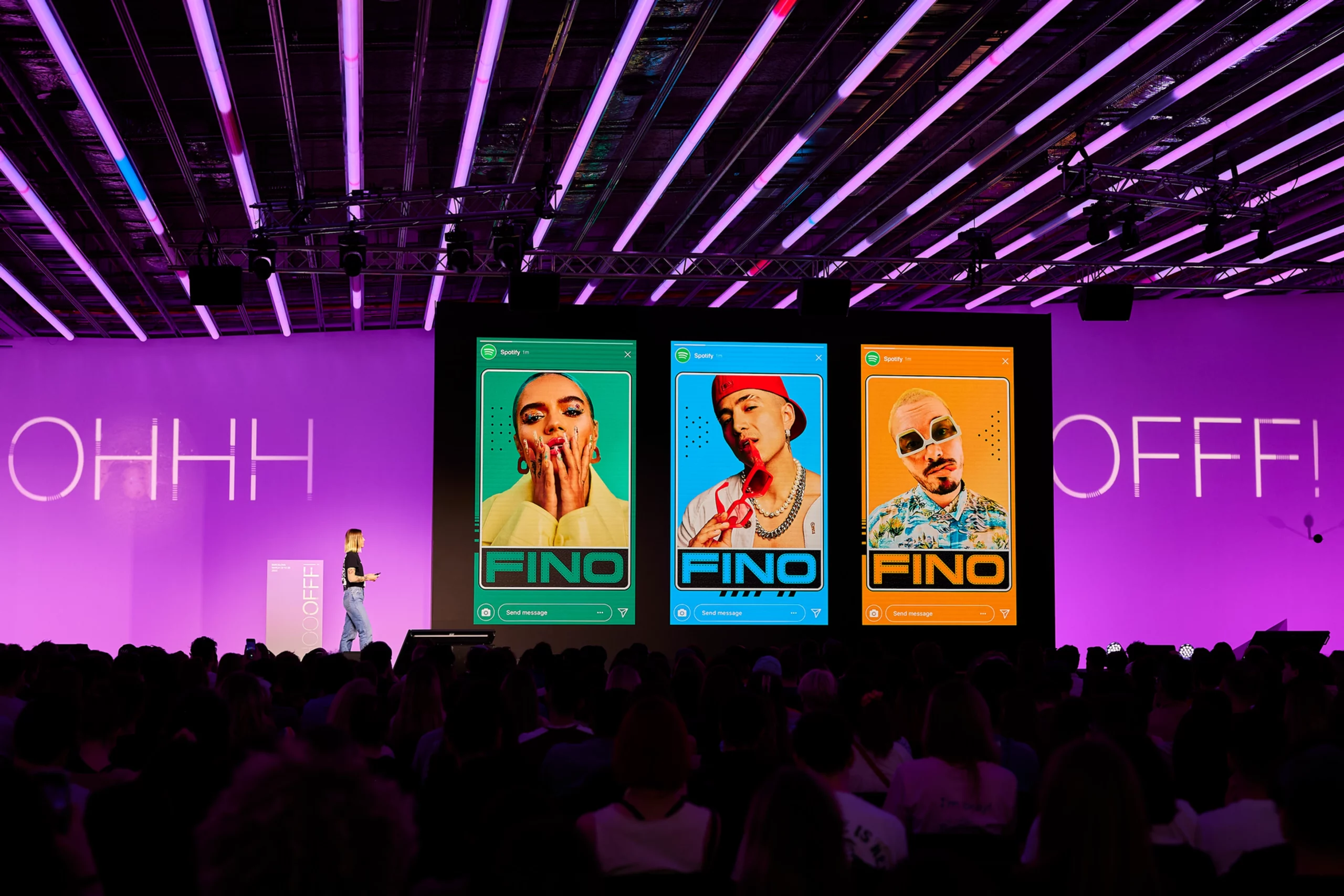
In early May we spoke with Katja Wenger about her experience at this year’s OFFF conference which took place from March 23-25 in Barcelonas Disseny Hub. We learned how she came to attend the event relatively spontaneously and what topics and speakers inspired her the most. We also talked about the importance of courage in design, the agency’s interest in showing presence at conferences, and what she thinks makes a successful conference. Join us as we gain insights and perspectives from this exciting conversation.

Hi Katja, you attended the OFFF conference in March in Barcelona… How did you come to participate?

I had participated the OFFF several times in the past, but with the pandemic everything came to a halt. In 2022 we went to the Forward Festival in Berlin in September and to the Paradigms Brand Experience Summit in Barcelona. For the latter, we were invited by our partner Frontify, who organized the conference for the first time. It was a great experience itself. 

Can you tell us about interesting topics and speakers at the OFFF?

OFFF offers a wide range of international speakers who are incredibly fascinating. There are big names like David Carson, who inspired me very early in my career, as well as smaller or lesser-known talents like the illustrator and artist Kelly Anna

It provides lots of input from various design disciplines, including motion design, 3D, interaction design, animation, and illustration. That’s what makes OFFF and conferences like the Forward Festival so appealing — you get to see different things that inspire you to explore new paths and be creatively productive again.

However, what stuck with me the most was the importance of being courageous in design.


What inspired or intrigued you the most at the conference?

Ultimately, the past six months have witnessed the birth of a new generation of AI, especially in conjunction with visual design. At the conference, we saw the cool possibilities that AI offers for visual designers. However, what stuck with me the most was the importance of being courageous in design. Being courageous means breaking out of the  traditional ideals of beauty and daring to do new things. The concept of beauty, as I learned and saw it many years ago, is evolving into something different. For example, there was a presentation by It’s Nice That, a website or blog that showcased design trends at OFFF. 

Some examples made me cringe because they looked terrible. It seems there’s a trend towards such “trashy” aesthetics. Of course, we can’t always be so daring when working with established brands. But it’s important to break new ground and encourage clients to incorporate some zeitgeist into their brand. Ideally, we have created a brand design framework that makes this possible. As an agency, we are perceived as trendsetters and are asked to provide insights into where the industry is heading.

So, it’s important for the agency to have a presence at such conferences?

It’s not only in my personal interest to attend these conferences. It’s also important for all the designers and also creative technologists who work at think moto. We give them the opportunity to participate in conferences as well. That’s very important for me. It’s not productive if only I, as the CCO, attend. We can’t effectively share the knowledge we’ve gained, and everyone has their own interests and feelings about different presentations. Everyone takes away something valuable. 

I recommend everyone to take part in conferences because they move you forward and allow you to step out of your own bubble and be inspired. There is something very special about listening to a lecture, reading between the lines and hearing the personal stories of the speakers. It’s especially inspiring for young designers, because they learn about a designer’s career, the effort they put into their work, and how chance led them to where they are now.

As an agency, we also actively participate in conferences ourselves. Sometimes it’s about a specific topic. With Branded Interactions, for example, we have been approached several times and have given several presentations at conferences. We’ve been to the CXI, the largest brand conference in Germany, twice so far, once together with a startup client and once with Volkswagen on the topic of Extended Realities

Most recently, we presented our Spherical Brand approach at a CX conference in Oslo, a new concept for brand management in the post-growth economy.  

I believe it is an opportunity for us to reach out and attract talented people. Being able to showcase our work and agency at these conferences provides an excellent chance to get visibility within the design community


What, in your opinion, makes a good conference or contributes to its success?

Of course, the speakers are key, but it’s not just that. The choice of location is also important. Sure, OFFF in Barcelona is super cool and huge, but last year I had the chance to attend Paradigms, which was the very first conference organized by Frontify. That conference impressed me the most. It’s hard to put into words. It was an amazing conference, especially considering the location, organization, food, evening events, and the international speakers they managed to bring together for such a small conference. It was just mind-blowing! If anyone ever gets the chance to attend, it’s absolutely fantastic! It focused on corporate design, brand management, and brand leadership. Frontify, being a company in that space, had the right tools for it.

Thank you Katja!

Meet the motos–Jordi Garreta

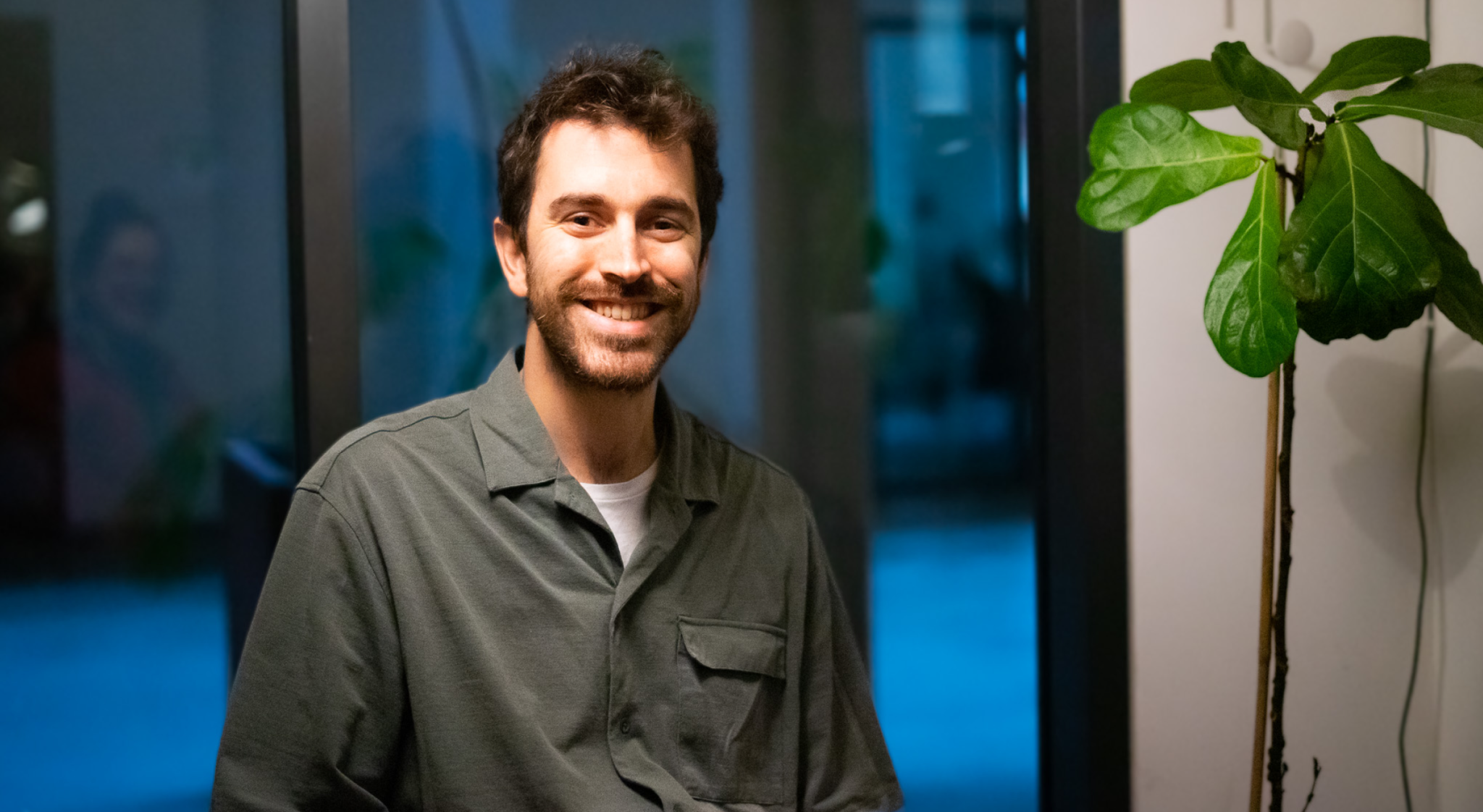
Introducing our “Meet the Motos” series, where we showcase the brilliant minds behind the think moto team. Join us as we take a deep dive into the daily work routine, various departments, exciting projects, and even take a sneak peek into the future. In today’s feature, we’re thrilled to introduce Jordi Garreta and explore the fascinating world of creative coding.

👋 Hi Jordi, good to have you here. Can you please introduce yourself?

Hi, my name is Jordi, I’m from Barcelona and I am a creative developer. I have lived in Berlin for almost three years and have worked at think moto for the same amount of time.

How did you become a creative coder?

I obtained my bachelor’s degree in Image and Sound Engineering in Barcelona, and then I moved to Milan to pursue a master’s degree in Interaction Design. I wanted to apply what I had learned in a more artistic environment and became a creative developer by combining my bachelor’s and master’s education.

What kind of companies have you worked for in the past?

After my master’s degree, I started my career working in a fablab in Milan where I worked on creative projects using machines for 3D printing and Arduino. I later moved back to Barcelona and worked for various startups, mainly focusing on data or interactive installations. I then moved to Berlin.

Sounds good. — How did you find your way to think moto?

Berlin has always been on my mind, and my brother lived here for several years which gave me the opportunity to visit often. It’s also a city with a lot of growth in the creative development field. After my partner found a job here and me being stuck at home during the Covid pandemic, I thought it was time for a change and started looking for job opportunities. That’s how I found my position at think moto.

Can you describe a typical day at think moto?

So usually we start with dailies, which are meetings with your project team. On Mondays, we have a general meeting with the entire team of think moto and twice a week, we have one with the developer team.

Currently, we also have two project-specific meetings to track progress. After the meetings, I usually start coding and working on projects. If I or another developer have questions, we have quick meetings to find solutions.

What kind of tools do you use the most?

It depends on the project, but as a creative developer, it’s important to be multidisciplinary and use as many software as possible. For websites, we use ReactJS, threeJS and for VR or AR projects, we use Unity.

What part of your work do you enjoy the most?

I enjoy working multidisciplinary and having every project bring new problems to solve, as it keeps me from falling into a routine. Occasionally it feels like a puzzle of solving things of the internet. I also like learning about new technologies, their pros and cons, and applying them to projects.

Sometimes creative coding feels like a puzzle of solving things of the internet.

Jordi Gareta

Can you tell us about a project you worked on that you particularly enjoyed?

I particularly enjoyed working on a VR experience where we connected chatbots using Cognigy.AI, which is the tool we use for creating chatbots. We created a virtual environment where a machine stands in front of you and the chatbot tells you how it works. We used hand tracking with the Oculus Quest 2, as well as text-to-speech and speech-to-text to communicate with the chatbot. The project involved applying several complex new technologies, and the end result was very nice.

Sounds cool. How do you stay focused and productive at work, especially since you work from home sometimes?

I feel comfortable working from home or from the office. For me, one way to stay focused is to listen to music. Of course, it depends on what I need to do. If I need to do some coding, then listening to music or a podcast, but if I need to concentrate on thinking, sometimes noise-cancelling headphones work best.

What role do you believe creative coding will play in shaping the future of technology and UX design?

I think that as a creative technologist, it’s important to not just apply technology, but also understand what it means. For example, when applying face recognition technology to a project, there are ethical issues that must be considered, such as obtaining consent from the person being recognized and the use of data. I believe that creative coding will play a crucial role in shaping the future of technology and design by considering these ethical issues when choosing which technologies to apply.

Interesting. What do you think sets think moto apart from others in the industry?

I think that think moto has a strong focus on design quality. We put a lot of effort into creating well-designed results. Additionally, we work on a variety of projects, including websites and VR projects, rather than just focusing on one type of project.

What do you do outside of work to maintain a good work-life balance?

I really enjoy sports like basketball and riding my bike. I also enjoy spending time with friends, drinking, exploring new places, discovering new music and going to concerts. Currently, I’m also going to comedy shows a lot – of course in English because I don’t speak German. And also as a creative coder, I like to keep things growing. That is why I sometimes do coding in my free time.

Alright, and do you have any tips for what to do in Berlin?

In winter? I would say go to bars, spend time with friends, drink and enjoy the nightlife in Berlin. Another great plan would be to play board games together. Berlin can be quite lonely in the winter, so try to be as close to your friends as possible.

Muchas gracias, Jordi!

You can learn more about Jordi on his website.

think moto goes rural–A Workshop-Experience

The day was here. My first time at think moto’s annual internal Branded Interactions Workshop. The expectations were high: I had already wanted to participate in a similar workshop half a year earlier as part of my studies before joining think moto for a semester. Unfortunately, nothing came of it then, but now the time had finally come.

For two days we were going to leave Berlin. Two days of workshop in the Mecklenburg Lake District with my head between nature and service design.

Friday, morning

Some of the colleagues have taken the workshop several times before, but there always seems to be a new component. It would never be boring, I was told. We pack the cars with plenty of provisions and workshop materials. I pick up conversations of Argentine barbecue and massive chunks of grilled meat. Did I mention that I love barbecue?

We arrive in the early morning. As a country bumpkin from Lower Saxony, I feel right at home in the green lowlands. The birds chirp pleasantly while we unpack, briefly enjoy the sun and set up the workshop.

Friday, noon

After a short snack, things get underway: Marco Spies, strategic partner at think moto and now head of the workshop, explains what the workshop will be about. The twelve participants are divided into three groups and the tasks are distributed. In order to oil our creative gears and gain experience with the Branded Interactions Design process, the task is to develop a new product or service for a specific brand. Of course, the thinking is user-centric, so each group is assigned a specific target group. When the starting signal is given, the three groups spread out across the site. The crackling of a freshly lit fire backdrops an intense brainstorming session.

For a short break, they head to the nearby lake. A colleague has brought fishing equipment and would like to treat us to some fresh catch. While he bobs on the lake with a small boat, the sun shines strongly on the surrounding forest. The scenery is picturesque, Bob Ross could not depict it more peacefully.

Friday, evening

After the short lunch break, the work continues, ideas are considered and discarded. Finally, the groups present their respective current status. Since our main focus is on creative methods, some presentations take on their own forms. Especially the lively role play of a group creates a cheerful atmosphere.

As dusk approaches, it is time to set up dinner. The rumors turned out to be true. Two massive pieces of meat cook on the two grills. In the meantime, vegetable chopping becomes a team-building task. Shish kebabs are created at breakneck speed and the work table would fit just as well in a factory hall of growing industrial nations.

In the late evening, all participants gather around the campfire. We sit relaxed around the fire, faces lit by twitching flames. Stories are told in the warming glow of the fire, while the topics take on an increasingly philosophical nature as time goes on.

Saturday, morning

Saturday morning we awaken gently to the aroma of coffee in the air and the songs of local birds. After a hearty breakfast and a team yoga session, it’s final spurt in the workshop. The groups meet one last time for final set up before it’s time to present the results of the last twenty-four hours.

Although there had already been presentations on interim statuses before, the focus was now for the first time on realizable products and services. All groups surprised with unexpected and very creative approaches.

Saturday, noon

With the official part of the workshop over, it was time to go to the lake once more to relax before most returned to the metropolis of Berlin.

It was the most intensive workshop I had the pleasure to participate in. Besides learning some new methods, I was also able to enjoy deeper insights into the Branded Interactions design process directly from the author. An experience that was definitely worth it.

Fare ye well, I’ll see you soon, forest.

Ich, der Praktikant und unser neuer Geschäftsführer

Seit vier Monaten bin ich als Praktikant bei think moto und vor einigen Tagen hat Norman als Geschäftsführer am Schreibtisch hinter mir Platz genommen. Norman ergänzt neben Katja und Marco die Geschäftsführung als Managing Director und betreut damit die Bereich Beratung, Finanzen und Technologie. Ich als Agentur-Neuling und Berufseinsteiger habe mich dafür interessiert, was es heißt die Geschäfte zu führen und wer mein neuer Nachbar ist.

1.) Du sitzt quasi seit 4 Wochen hinter mir, und ich habe doch wenig Ahnung davon was du machst – außer flotte Sprüche bei unserem allmorgendlichen Stand Up zu klopfen. Was bedeutet es die Geschäfte zu führen?

Das ist also Deine Wahrnehmung von mir, nach gut vier Wochen. Auch interessant. Demnächst habe ich auch noch Urlaub. Dann ist mein Image wohl perfekt. Spaß bei Seite. Die Geschäfte zu führen bedeutet grundsätzlich die Verantwortung für das Wohl der Firma und der Mitarbeiter zu haben. „Das Wohl“ heißt dann wiederum konkret: persönlich, inhaltlich und wirtschaftlich dafür zu sorgen, dass wir gemeinsam a) Spaß und b) Erfolg haben.

2.) Und wie hast du es so weit gebracht?

(Lacht!) Das kommt auf die Perspektive an, wie weit ‘weit’ ist. Ich wollte immer Kommunikationsprodukte begleiten und herstellen. Aktuell passiert viel im Spannungsfeld digitale Produkte, Identitäten und Services. Mich hat das interessiert. Und ich war – das wird mir zumindest nachgesagt – bereit, etwas mehr Zeit, Liebe und Energie aufzubringen. Darüber hinaus, und vielleicht ist das entscheidend, hatte ich immer Menschen um mich, die mich gefördert und gefordert haben. Die an mich geglaubt haben. Ob das bei PUBLICIS war, oder bei Neue Digitale in Frankfurt oder bei Hi-ReS! in Berlin. Immer gab es Menschen, und zwar auf allen Ebenen, die ausgerechnet mit mir etwas reißen wollten. Ich habe mehrfach erlebt, dass dann etwas Besonderes und Großes entstehen kann.

3.) Soweit ich das verstehe, verschaffst du uns mit deiner Arbeit Arbeit. Um mich herum sitzen viele kreative Köpfe mit Visionen. Welche Vision verfolgst du? Wo soll es hin gehen?

Der letzte rauchende Dinosaurier unserer Zeit hat mal gesagt: „Wer Visionen hat, soll zum Arzt gehen.“ Vielleicht ist das ein wenig hart ausgedrückt vom Visionär Helmut Schmidt. Ich halte es so: Ideen und Visionen sind nichts, wenn man diese nicht auf die Straße – heißt umgesetzt – bekommt. Dann bleiben es schlicht Dinge, denen man hinterher trauert. Meine Stärke liegt darin, Ideen und Visionen nachvollziehen und mitgehen zu können. Und vor allem, eine Idee bzw. Lösung zu entwickeln, wie man diese umsetzen und zum Leben erwecken kann. In diesem Sinne ist meine Vision, Leuten zu helfen, Visionen Wirklichkeit werden zu lassen.

4.) Kommt es vor, dass Du nicht arbeitest? Und was machst Du dann?

Ruhephasen sind extrem wichtig, dass musste ich schon feststellen. Ich habe eine kleine Familie. Meine Tochter ist 7 Jahre und kommt im September in die 3. Klasse. Wow! Das ist natürlich jemand, der immer etwas für mich zu tun hat. Außerdem schraube ich mit meinem Bruder an Motorrädern. Vor gut 4 Monaten bin ich mein erstes Classic-Enduro mit einer KTM GS 80 Baujahr 79 gefahren. Mehr Spaß pro Kilometer kann man nicht haben. Senior advice: Sollte jeder machen!

Erwischt man Herr Rockmann (alias Rocketman) dabei wenn er das Steuerrad verlässt, um sich einen frischen Filterkaffe zu brühen, endet dies immer wieder in einer auflockernden und erheiternden Begegnung. Norman erweckt als neuer Geschäftsführer ganz den Eindruck, dass es trotz strukturiertem Agenturalltag an schönen Sommermorgen wie diesem, Zeit und Raum für Begegnung gibt.

Über die musikalische Untermalung bei der Arbeit lässt sich mit Ihm auch quatschen, denn sein Musikgeschmack trifft zumindest meinen… http://www.last.fm/de/user/rockmann


Wohin geht’s in 2016?

Zu Beginn eines jeden Jahres ist es an der Zeit, in die Glaskugel zu schauen und eine Zeitreise in das kommende Jahr zu unternehmen. Mit dem Wechsel in das Neue – sowieso vielversprechendere – Jahr wird gewöhnlich viel evaluiert, (selbst)reflektiert, geschrieben und noch mehr vorgenommen. Im Internet wimmelt es wieder nur so von fragenden oder weissagenden Posts und Berichten: “Was kommt 2016 so auf uns zu?” Für unsere Branche haben jedenfalls folgende drei Trends meine Aufmerksamkeit erregt. Continue reading “Wohin geht’s in 2016?”

English Version of Branded Interactions Will Be Available Soon

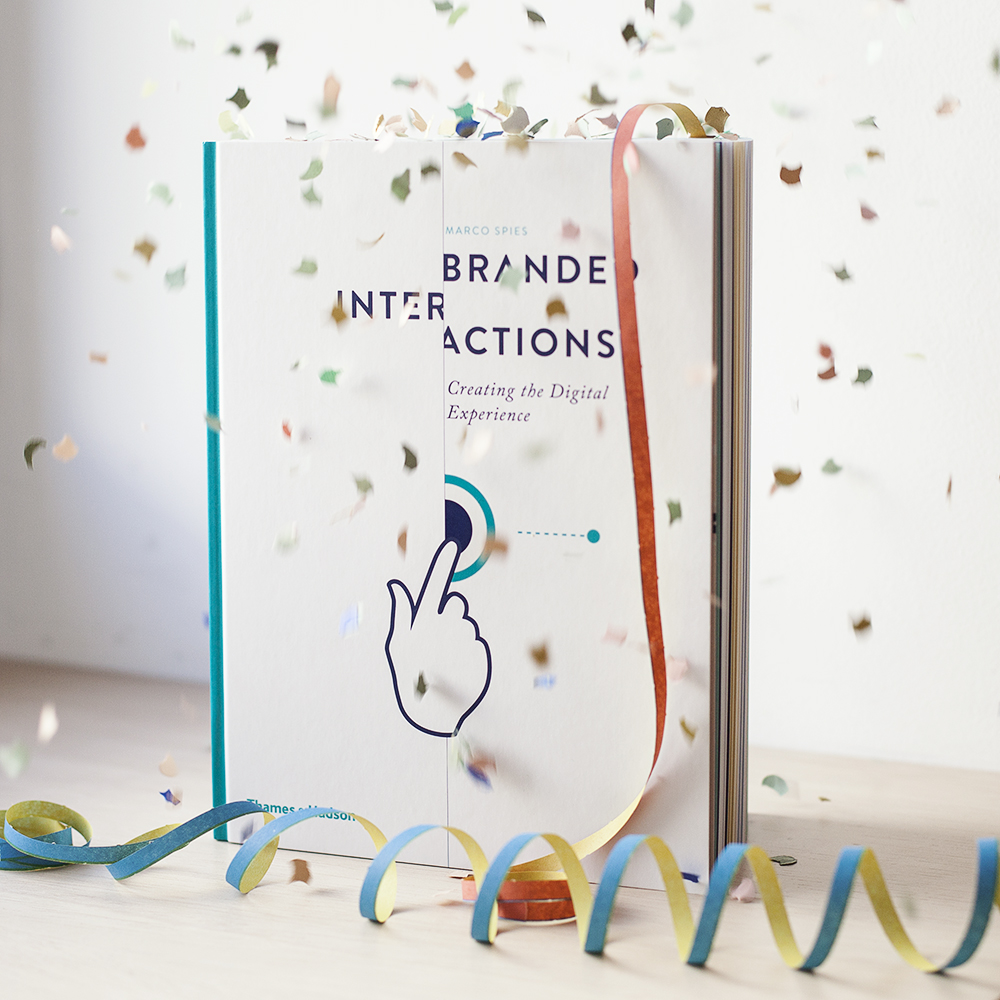
We’re happy to announce that the English version of Branded Interactions will finally be available from the 6th of October.

After publishing two editions of the German version, we have received many inquiries from all over the world asking for an English version of the book. It will be published by Thames&Hudson, a proficient publishing partner with more than 60 years of experience with books in the field of art and education. Continue reading “English Version of Branded Interactions Will Be Available Soon”

Beiträge von Marco Spies in der form und in der PAGE

Und wieder sehr erfreuliche Nachrichten: Ein paar Beiträge von Marco wurden kürzlich in den Design-Fachzeitschriften form und PAGE veröffentlicht! Nachfolgend geben wir einen kleinen Überblick über die Themen.

Continue reading “Beiträge von Marco Spies in der form und in der PAGE”

We minimize and compensate our CO2 consumption.

Cookie Consent with Real Cookie Banner