Meet the motos–Jasmin Cziborra

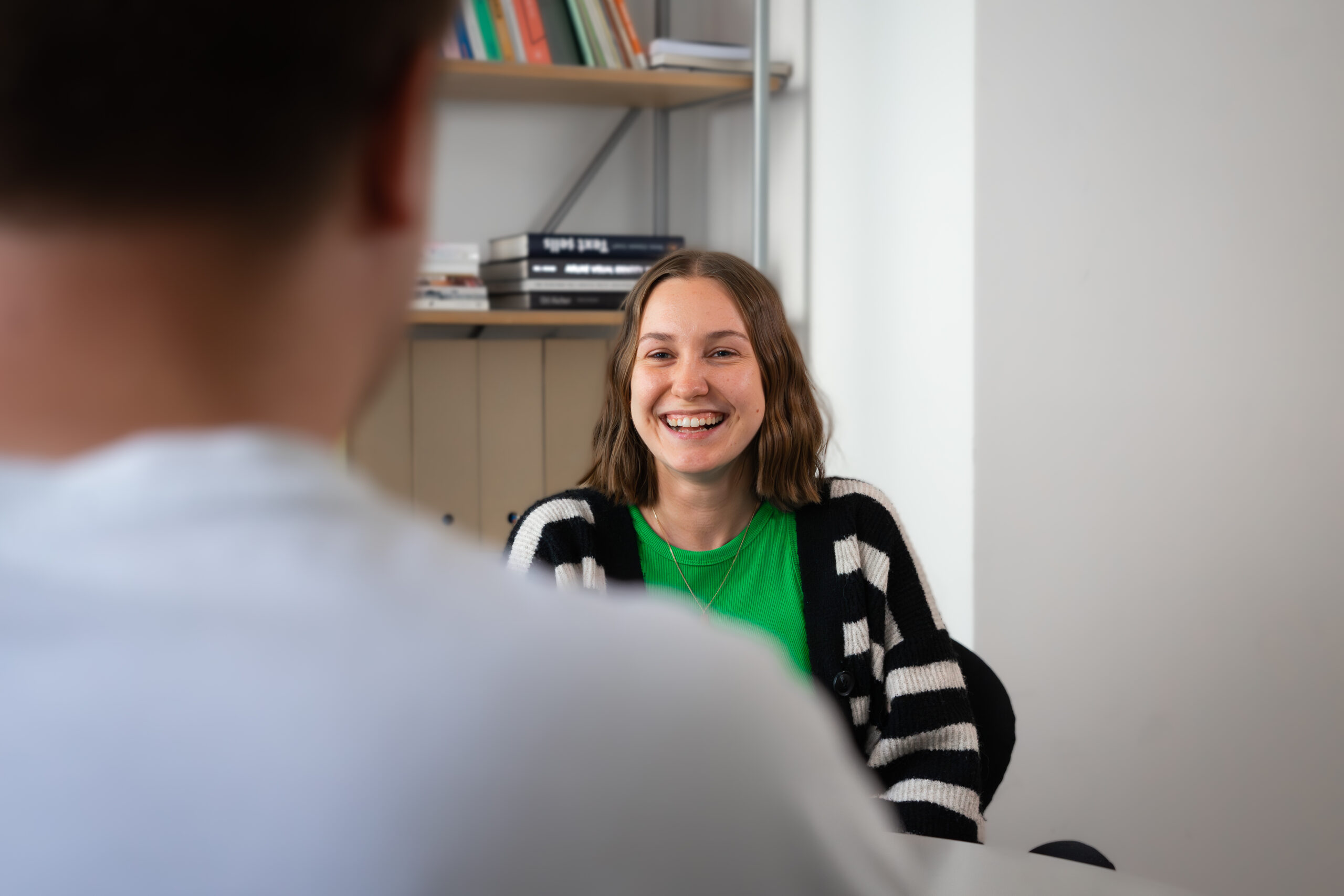
In our “Meet the Motos” series, we introduce you to the brilliant minds behind the think moto team. Today we talked to Jasmin Cziborra. She is a user experience designer and speaks about her work at think moto.

👋 Hi Jasmin! It’s wonderful to have you with us. Can you tell us a bit about yourself?

Hello! I am Jasmin, 25-year-old UX designer here at think moto. I started as an intern and working student at think moto and have now been permanently employed for about 2 years. I was born and raised in Saarland. For my studies, I moved to Schwäbisch Gmünd near Stuttgart, where I studied interaction design at the Hochschule für Gestaltung (University of Design). During my internship, I fell in love with Berlin and decided to move here. 

Your path to think moto began with an internship. How did you discover the agency and what inspired you to join our team?

That was in the fourth semester of my studies. At that time, I was studying interaction design in Schwäbisch Gmünd and was looking for an internship. During this search, a friend recommended the book Branded Interactions to me. I quickly realized that the authors were running an agency. On the think moto website, I then saw that they were looking for UX/UI interns and I applied immediately. The rest is history. 

As a UX designer, what kinds of projects do you typically work on? 

Actually, I am working here at think moto in a hybrid role. I am a UX designer, but I operate at the intersection between strategy and visual design. I take the concepts from strategy and translate them into concrete concepts for websites or chatbots. My outputs are usually wireframes and descriptions for interaction behavior, which I then pass on to the visual design team. I have also been involved in conversational design projects for the design of chatbots. Overall, I enjoy moving between strategy and concept, understanding the essence of a brand, and then translating that into a concept.

You mentioned that the team is an essential part for you. How would you describe the think moto team dynamic?

A harmonious team culture is just as important to me as the projects and was crucial for my decision to work at think moto. We support each other, appreciate feedback from others, and deal openly with criticism. It’s nice that we can interact so openly, have a beer together after work or play games. We also regularly hold smaller team events, which I personally really enjoy.

What makes think moto stand out for you, besides the good atmosphere?

For me, what distinguishes think moto, in addition to the pleasant atmosphere, is primarily the diversity of projects. We collaborate with a wide range of industries, starting from small companies to very large ones. Our projects are diverse, and we always tailor our process to the clients and their needs. I also like that think moto places great emphasis on sustainability. Everything we develop follows the principle of being smart, simple, and sustainable.

Outside of work, do you also spend your free time with creative activities?

Absolutely! I like to explore the world through my lens. I enjoy photography and often film in my everyday life. I always carry a small camera with me that can record 4K videos. At the end of the year, I then edit a small annual review. I also like sharing these videos with friends and family.

Thanks for sharing your journey with us, Jasmin. It’s been a pleasure learning about you and your work at think moto.

Our CCO Katja Wenger on why you should attend design conferences


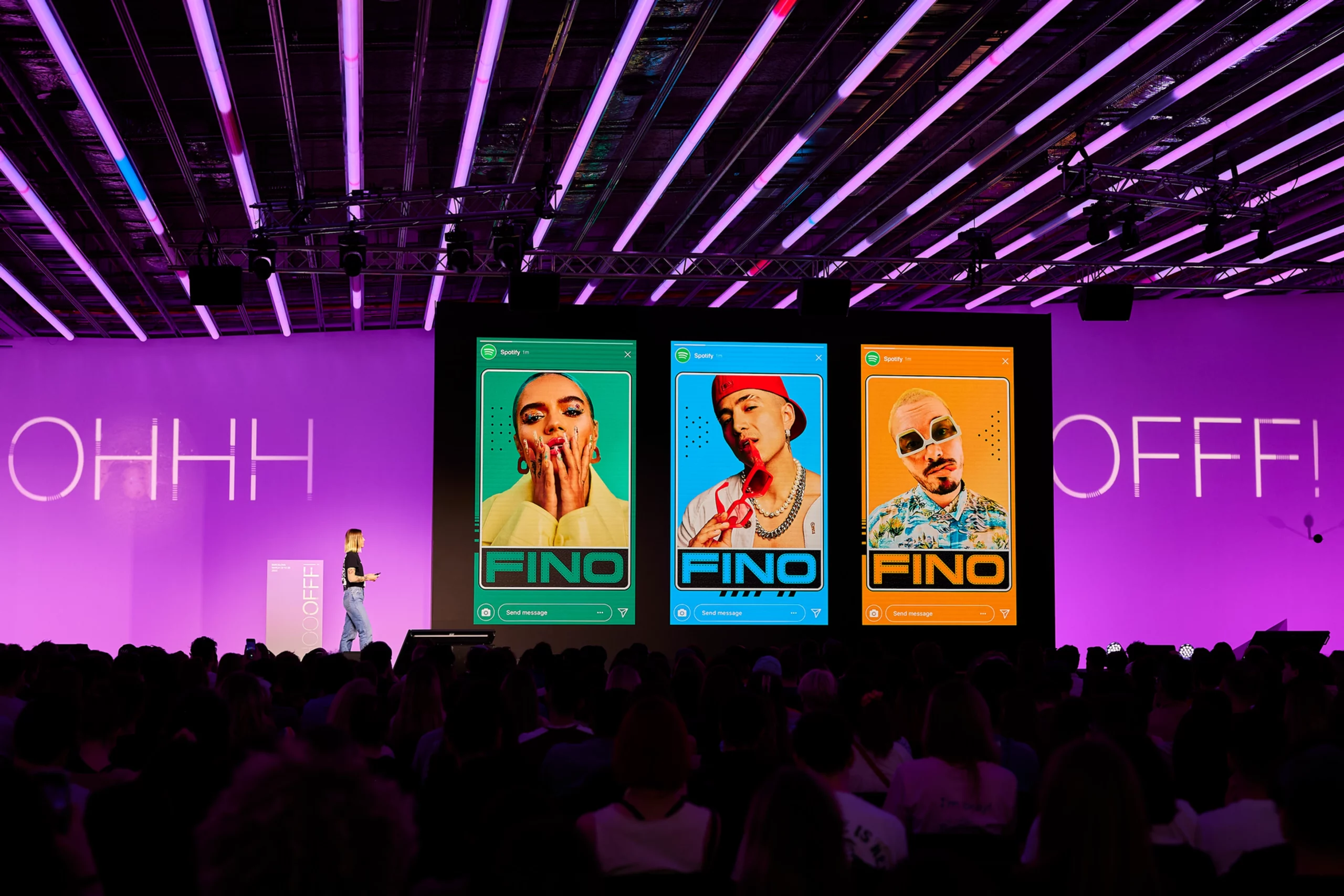
In early May we spoke with Katja Wenger about her experience at this year’s OFFF conference which took place from March 23-25 in Barcelonas Disseny Hub. We learned how she came to attend the event relatively spontaneously and what topics and speakers inspired her the most. We also talked about the importance of courage in design, the agency’s interest in showing presence at conferences, and what she thinks makes a successful conference. Join us as we gain insights and perspectives from this exciting conversation.

Hi Katja, you attended the OFFF conference in March in Barcelona… How did you come to participate?

I had participated the OFFF several times in the past, but with the pandemic everything came to a halt. In 2022 we went to the Forward Festival in Berlin in September and to the Paradigms Brand Experience Summit in Barcelona. For the latter, we were invited by our partner Frontify, who organized the conference for the first time. It was a great experience itself. 

Can you tell us about interesting topics and speakers at the OFFF?

OFFF offers a wide range of international speakers who are incredibly fascinating. There are big names like David Carson, who inspired me very early in my career, as well as smaller or lesser-known talents like the illustrator and artist Kelly Anna

It provides lots of input from various design disciplines, including motion design, 3D, interaction design, animation, and illustration. That’s what makes OFFF and conferences like the Forward Festival so appealing — you get to see different things that inspire you to explore new paths and be creatively productive again.

However, what stuck with me the most was the importance of being courageous in design.


What inspired or intrigued you the most at the conference?

Ultimately, the past six months have witnessed the birth of a new generation of AI, especially in conjunction with visual design. At the conference, we saw the cool possibilities that AI offers for visual designers. However, what stuck with me the most was the importance of being courageous in design. Being courageous means breaking out of the  traditional ideals of beauty and daring to do new things. The concept of beauty, as I learned and saw it many years ago, is evolving into something different. For example, there was a presentation by It’s Nice That, a website or blog that showcased design trends at OFFF. 

Some examples made me cringe because they looked terrible. It seems there’s a trend towards such “trashy” aesthetics. Of course, we can’t always be so daring when working with established brands. But it’s important to break new ground and encourage clients to incorporate some zeitgeist into their brand. Ideally, we have created a brand design framework that makes this possible. As an agency, we are perceived as trendsetters and are asked to provide insights into where the industry is heading.

So, it’s important for the agency to have a presence at such conferences?

It’s not only in my personal interest to attend these conferences. It’s also important for all the designers and also creative technologists who work at think moto. We give them the opportunity to participate in conferences as well. That’s very important for me. It’s not productive if only I, as the CCO, attend. We can’t effectively share the knowledge we’ve gained, and everyone has their own interests and feelings about different presentations. Everyone takes away something valuable. 

I recommend everyone to take part in conferences because they move you forward and allow you to step out of your own bubble and be inspired. There is something very special about listening to a lecture, reading between the lines and hearing the personal stories of the speakers. It’s especially inspiring for young designers, because they learn about a designer’s career, the effort they put into their work, and how chance led them to where they are now.

As an agency, we also actively participate in conferences ourselves. Sometimes it’s about a specific topic. With Branded Interactions, for example, we have been approached several times and have given several presentations at conferences. We’ve been to the CXI, the largest brand conference in Germany, twice so far, once together with a startup client and once with Volkswagen on the topic of Extended Realities

Most recently, we presented our Spherical Brand approach at a CX conference in Oslo, a new concept for brand management in the post-growth economy.  

I believe it is an opportunity for us to reach out and attract talented people. Being able to showcase our work and agency at these conferences provides an excellent chance to get visibility within the design community


What, in your opinion, makes a good conference or contributes to its success?

Of course, the speakers are key, but it’s not just that. The choice of location is also important. Sure, OFFF in Barcelona is super cool and huge, but last year I had the chance to attend Paradigms, which was the very first conference organized by Frontify. That conference impressed me the most. It’s hard to put into words. It was an amazing conference, especially considering the location, organization, food, evening events, and the international speakers they managed to bring together for such a small conference. It was just mind-blowing! If anyone ever gets the chance to attend, it’s absolutely fantastic! It focused on corporate design, brand management, and brand leadership. Frontify, being a company in that space, had the right tools for it.

Thank you Katja!

Meet the motos–Jordi Garreta

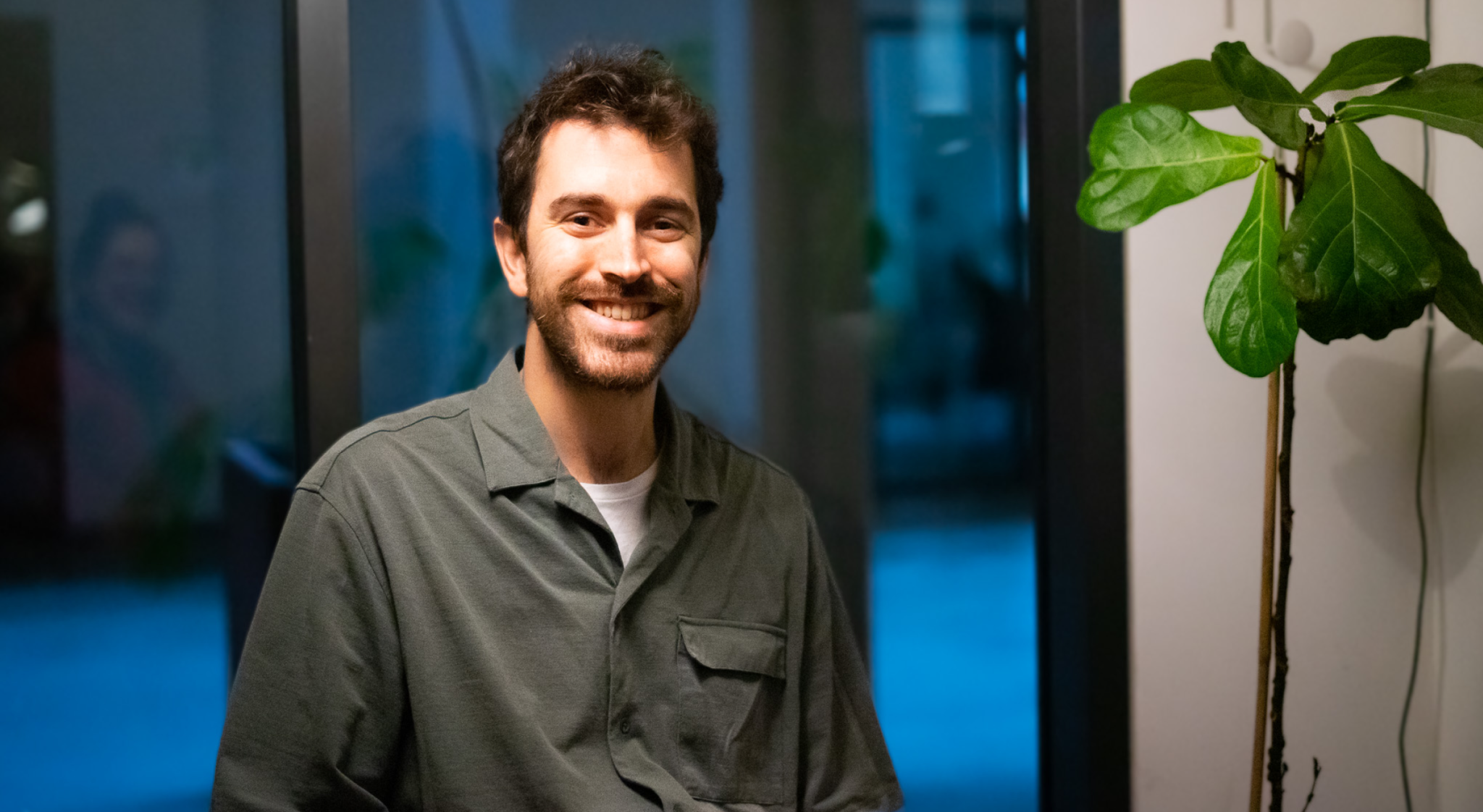
Introducing our “Meet the Motos” series, where we showcase the brilliant minds behind the think moto team. Join us as we take a deep dive into the daily work routine, various departments, exciting projects, and even take a sneak peek into the future. In today’s feature, we’re thrilled to introduce Jordi Garreta and explore the fascinating world of creative coding.

👋 Hi Jordi, good to have you here. Can you please introduce yourself?

Hi, my name is Jordi, I’m from Barcelona and I am a creative developer. I have lived in Berlin for almost three years and have worked at think moto for the same amount of time.

How did you become a creative coder?

I obtained my bachelor’s degree in Image and Sound Engineering in Barcelona, and then I moved to Milan to pursue a master’s degree in Interaction Design. I wanted to apply what I had learned in a more artistic environment and became a creative developer by combining my bachelor’s and master’s education.

What kind of companies have you worked for in the past?

After my master’s degree, I started my career working in a fablab in Milan where I worked on creative projects using machines for 3D printing and Arduino. I later moved back to Barcelona and worked for various startups, mainly focusing on data or interactive installations. I then moved to Berlin.

Sounds good. — How did you find your way to think moto?

Berlin has always been on my mind, and my brother lived here for several years which gave me the opportunity to visit often. It’s also a city with a lot of growth in the creative development field. After my partner found a job here and me being stuck at home during the Covid pandemic, I thought it was time for a change and started looking for job opportunities. That’s how I found my position at think moto.

Can you describe a typical day at think moto?

So usually we start with dailies, which are meetings with your project team. On Mondays, we have a general meeting with the entire team of think moto and twice a week, we have one with the developer team.

Currently, we also have two project-specific meetings to track progress. After the meetings, I usually start coding and working on projects. If I or another developer have questions, we have quick meetings to find solutions.

What kind of tools do you use the most?

It depends on the project, but as a creative developer, it’s important to be multidisciplinary and use as many software as possible. For websites, we use ReactJS, threeJS and for VR or AR projects, we use Unity.

What part of your work do you enjoy the most?

I enjoy working multidisciplinary and having every project bring new problems to solve, as it keeps me from falling into a routine. Occasionally it feels like a puzzle of solving things of the internet. I also like learning about new technologies, their pros and cons, and applying them to projects.

Sometimes creative coding feels like a puzzle of solving things of the internet.

Jordi Gareta

Can you tell us about a project you worked on that you particularly enjoyed?

I particularly enjoyed working on a VR experience where we connected chatbots using Cognigy.AI, which is the tool we use for creating chatbots. We created a virtual environment where a machine stands in front of you and the chatbot tells you how it works. We used hand tracking with the Oculus Quest 2, as well as text-to-speech and speech-to-text to communicate with the chatbot. The project involved applying several complex new technologies, and the end result was very nice.

Sounds cool. How do you stay focused and productive at work, especially since you work from home sometimes?

I feel comfortable working from home or from the office. For me, one way to stay focused is to listen to music. Of course, it depends on what I need to do. If I need to do some coding, then listening to music or a podcast, but if I need to concentrate on thinking, sometimes noise-cancelling headphones work best.

What role do you believe creative coding will play in shaping the future of technology and UX design?

I think that as a creative technologist, it’s important to not just apply technology, but also understand what it means. For example, when applying face recognition technology to a project, there are ethical issues that must be considered, such as obtaining consent from the person being recognized and the use of data. I believe that creative coding will play a crucial role in shaping the future of technology and design by considering these ethical issues when choosing which technologies to apply.

Interesting. What do you think sets think moto apart from others in the industry?

I think that think moto has a strong focus on design quality. We put a lot of effort into creating well-designed results. Additionally, we work on a variety of projects, including websites and VR projects, rather than just focusing on one type of project.

What do you do outside of work to maintain a good work-life balance?

I really enjoy sports like basketball and riding my bike. I also enjoy spending time with friends, drinking, exploring new places, discovering new music and going to concerts. Currently, I’m also going to comedy shows a lot – of course in English because I don’t speak German. And also as a creative coder, I like to keep things growing. That is why I sometimes do coding in my free time.

Alright, and do you have any tips for what to do in Berlin?

In winter? I would say go to bars, spend time with friends, drink and enjoy the nightlife in Berlin. Another great plan would be to play board games together. Berlin can be quite lonely in the winter, so try to be as close to your friends as possible.

Muchas gracias, Jordi!

You can learn more about Jordi on his website.

Meet the motos–Paul Krizsan

In our weekly series “meet the motos” we introduce you to our bright minds from the think moto team. We provide insights into different departments, everyday work life, tell you about exciting projects and dare to take a look into the future. Today: Paul Krizsan and the chatbot potential. 

👋 Hi Paul, glad you took the time. What are you doing at think moto?

I am a design hybrid with a focus on conversational design, i.e. voice and chatbots. My tasks range from visual design to UX design and JavaScript development. Currently I’m working on the rebranding of a German university, our award-winning chatbot Lui and various smaller projects, internally and externally.

That sounds exciting – how did you get into it?

I’ve been involved with technologies and new ways of interaction for quite some time now. My journey has taken me via virtual reality to bots, among other things. The latter in particular is currently undergoing a very exciting development. Previously still considered unreliable, poor customer support and small chat windows in the lower right corner, they now enable new touchpoints for customers to be played with emotionally and also visually.

“Chatbots today make it possible to play on new touchpoints emotionally and also with powerful imagery and storytelling.”

Paul Krizsan

What role do you think chatbots will play for companies in the future? And what do you see as your task?

There are already some brands that have successfully integrated chatbots into their customer journey. Be it in the area of customer service, in customer retention or, as happened with our chatbot Lui, in new customer acquisition. All these examples show that chatbots can already play a significant role. In addition, chatbot technologies are getting better and better. We are currently observing this with our preferred bot platform  Cognigy.AI. I therefore assume that in the future, more and more companies will rely on chatbots to reach their customers individually and interactively with brand character.

In this context, I see my task primarily in developing chatbots that create real added value for the customer, but also for the company. In addition, when developing chatbots at think moto, we make sure that the personality of the chatbot goes hand in hand with the attributes of the brand. For this purpose, we at think moto have developed various tools, such as so-called “bot filters”. With the bot filters, we ensure that the personality and tone of voice of the chatbot reflect the brand essence.

Sounds like a lot of work – What does a normal day look like for you?

Our days always start at 9:30 a.m. with a little agency-wide standup, through which you get a good insight into ongoing topics and projects, even if you’re not directly involved. After that, it’s either direct meetings and presentations or my email correspondence for me. Most mornings are more about collaborative tasks, while in the afternoon I can then focus on my topics.

Group of people sitting around an office conference room table in discussion.

How do you structure yourself and what are your tips for everyday work?

I’m a fan of consistent lunch breaks and take time for that between 12 and 1 pm. After that, it’s off to concrete creative, technical or strategic thinking work and smaller joint reviews until closing time, which is around 7 pm.

What makes think moto special for you?

Besides lovely colleagues, the biggest benefit is the customer selection. There is always something interesting and exciting to throw yourself into. Sometimes you have to hold back 😉

If you had to describe yourself, what three hashtags would you use?

#mountainbike #tech #indie

Which film has influenced you the most?

Spike Jonze’s Her (2013) is definitely partly responsible for my current fascination with conversational design and personalization through user interaction.

Finally, how would you describe think moto in three hashtags?

#creative #young #curious

Thanks, Paul!

Do you have specific questions about chatbots? Then visit our page on this topic at thinkmoto.de/chatbots.

Meet The Coaches–Benjamin Apfelbaum

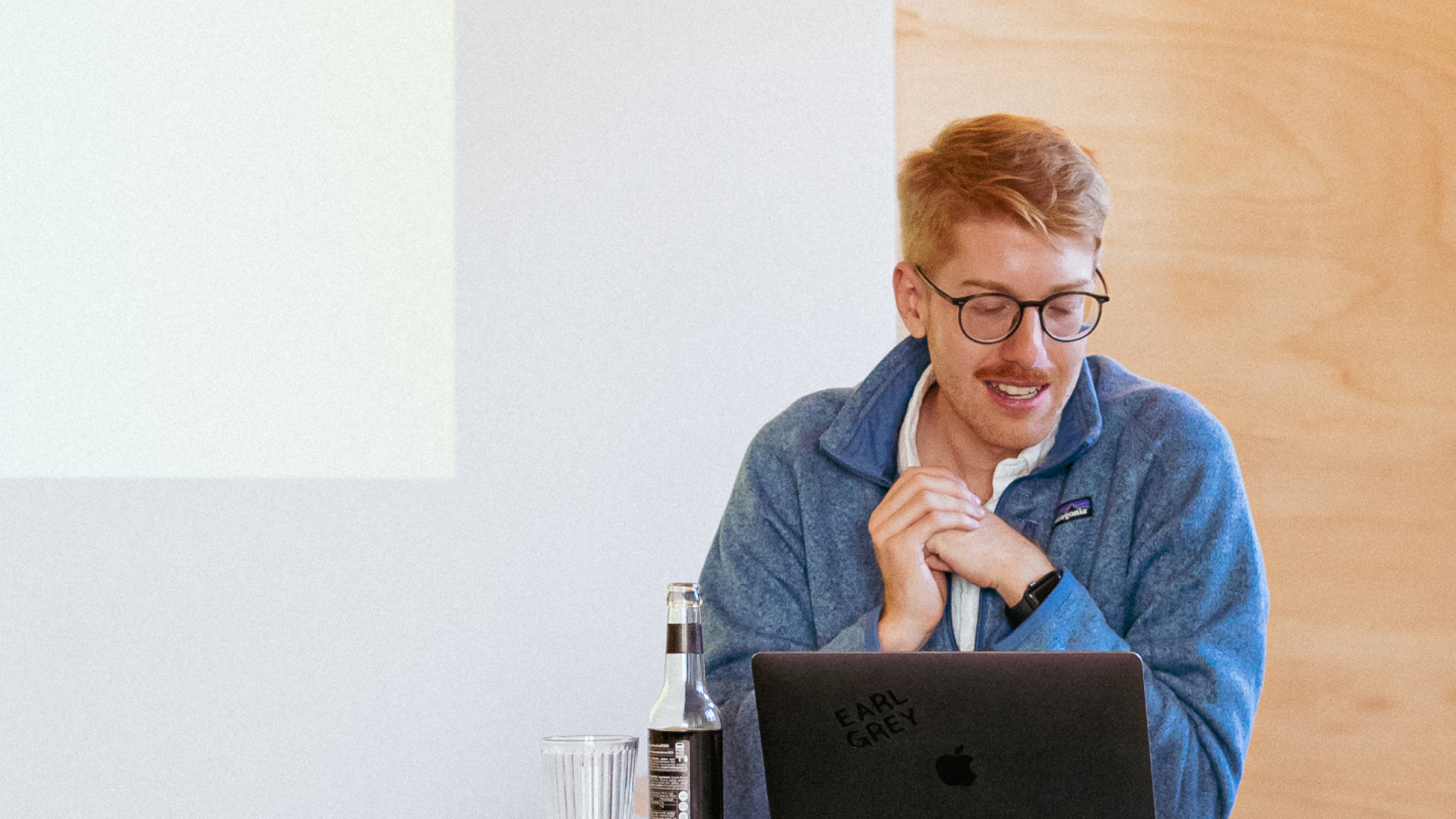
Benjamin Apfelbaum is a communications trainer and freelance creative from Berlin. From October 31, Benjamin will be passing on his extensive knowledge of presentation and storytelling as a coach in his two-day intensive course Story Meets Design at the think moto Academy. But we’d rather let the charismatic stage man introduce himself…

👋 Hi Benjamin, please describe yourself in no more than five hashtags.

enthusiasm #stories #ramp #energy

What inspires you? What drives you?

Inspiring people, myself included. That means discovering new things and also constantly rediscovering yourself, pushing and trying new things. And islands. Islands are the best.

Can you briefly tell us something about your career? How did you get to where you are today?

I started as a designer in 2000 and over the years I’ve taken on more and more conceptual and strategic issues. I have always enjoyed presenting in any form. In particular, I found pitches for clients terrific. Later, when I was responsible for larger and larger teams, I was incredibly happy when I could help and watch people grow. Almost two years ago, I decided to get my business trainer license and have been working as a freelance consultant and trainer ever since.

“After all, all theoretical knowledge doesn’t help you if you can’t apply it under time pressure.”

Benjamin Apfelbaum

What can people learn from your training?

In one sentence. You learn how to present better and have fun at the same time. A bit more: You learn what makes a good presentation – and how to get there. From understanding briefings, to developing ideas, to being convincing in front of an audience. What is incredibly important to me: Always based on understandable exercises and methods that can be used in day-to-day business. All theoretical knowledge is of no use if you can’t apply it under time pressure.

Can you give us a must-have tip or an absolute no-go for presentations in advance?

All right 😉 Must-have tip: If you don’t do dress rehearsals before presentations, you shouldn’t be surprised when things don’t work. Time pressure or not.
Absolute no-go: Mega-full PowerPoint slides and then reading everything off.

How did you hear about the think moto Academy? How did the collaboration come about?
I bought the first issue of Branded Interactions years ago and worked with it a lot – that’s how I heard about think moto. When I heard on LinkedIn that Marco and Katja had founded the Academy, I simply wrote to them. We met for a coffee, hit it off and now we’re working together.

If people want to know more about you, where is the best place to search?
Either on www.benjamin-apfelbaum.com. Alternatively, you can just meet me for a coffee 😉 .
You can also find out more about Benjamin’s course “Story Meets Design” at the think moto Academy.

We minimize and compensate our CO2 consumption.

Cookie Consent with Real Cookie Banner