Data-Driven Design–Designing with Data in a User-Centric Way

We talked to Marie Bossecker, Senior Experience Strategist at think moto, about Data-driven Design. She has many years of experience in combining data, strategy and design in such a way that they form the basis for development processes for digital products and services. We asked Marie what data-driven design actually is, how data-based design and creativity are connected, and how innovation gains quality through user data.

Data-driven design is radically user-centric and derives from design thinking. The first step, even before the strategy and design process begins, is an extensive collection of real user data that reflects the current behavior of the user group. Together with further data collection during the process, they form the basis for the development of new approaches in strategy and design.

“Data-driven design means making design decisions based on prior research and data analysis.”

The term data encompasses both the results from qualitative research, such as interviews, and quantitative research, such as surveys or tracking data.

What is the Data-driven Design process?

As with many design approaches, there is no clear process template. The steps presented here are a framework that can be used as is or modified slightly. As a structural basis, the 5 steps of Design Thinking serve: Empathize, Define, Ideate, Design and Test.

1. Data collection & analysis

Data can be collected using various methods, e.g., qualitative user interviews or quantitative data collection. Tools that anonymously query or record user behavior, such as in-page surveys, heat and click maps, or eye tracking, can be used for this purpose.

Data analysis is the task of the strategists. They interpret the data and filter out the problematic interfaces. Many modern tools for data analysis can help to identify conspicuous features and hierarchies that promote or negatively influence the performance of a website.

2. Definition

The task now is to react to the findings and assumptions made. This phase is accompanied by extensive research and, if necessary, user tests to re-examine the assumptions. There are many inclinations in the market that can affect user behavior. For example, the pandemic. User behavior has changed extremely as a result. These external influences and trends are highlighted and analyzed in the definition phase.

“Does a better conversion rate mean we’ve had success, or are there perhaps other movements in the market or in the target group that are influencing this result?”

3. Strategy

In this stage of research, a strategy/concept is developed based on the previous steps, which addresses the identified problems and includes possible solutions. As a rule, several approaches are developed here, which must prove themselves in the course of the further process or are just discarded.

4. Design & Implement

Based on the strategy, conceptual and design measures result, which are implemented by the designers. These are then implemented in the existing website. But the job is not done after that.

5. Test

After implementation, a test phase is carried out again to check how successful a measure was. The data obtained can then be used in turn to draw lessons and develop a revised strategy. This cycle is also known as “customer journey optimization”.

What role do strategists play in the data-driven design process, and how do they differentiate themselves from data analysts?

In quantitative methods, data analysts are primarily responsible for enabling data collection, i.e., creating an interface between the platform and the analysis tool, storing the data, and making it available to strategists in accessible dashboards. Interfaces, such as Google Analytics, hotjar or VWO, make the collection and transmission of data possible in the first place. In order to better evaluate the generated data, it is translated into dashboards and presented in an understandable way using data visualization. The strategists gain access to the data and can now evaluate it. Their task is to analyze and interpret the collected data, define measures, accompanied by extensive research, and then develop a strategy.

In qualitative methods of data collection, for example interviews or focus groups, strategists can be involved from the beginning. They develop the study, define aims and set the framework. After data collection, they then also evaluate the data.

What is the added value from combining strategy and data analysis in the design process?

With the flood of digital offerings, those who know their users best and create the best experience for them will prevail. The short attention span of users has made it all the more important to present relevant content in the most accessible way possible. The better the experience is tailored to the user and their needs, the longer their stay and the higher the likelihood of a “conversion,” such as a purchase or download.

It is almost impossible for designers today to include all the needs of potential user groups in design decisions. Some use the website very frequently, others only drop by occasionally. There are digitally affine personalities and those who need more assistance. That’s why it’s important for designers to draw on previous, data-based research. These show the current, real-world behavior of active user groups.

“You can’t know as a designer what your users really do or need without prior, data-based research. That’s where the clear difference lies between having some opinion and having some knowledge.”

Where does our Branded Interactions design process link to the Data-driven Design approach?

Data analysis can be well integrated in all phases of the branded interactions design process. It depends on the project and the industry of the customer how intensively the analysis of user data can be applied. Data collection is particularly helpful on websites with high traffic, where many users come together, such as in a large e-commerce store. Chatbots and their interfaces also provide a good basis for increasing performance through data in the long term. Qualitative data collection, on the other hand, can also support pure branding projects and MVBs and help to better understand the user group from the beginning through interviews and other research methods.

“Especially in the first two phases, Discovery and Define, data-driven strategy can be linked to the Branded Interactions design process. In Phase 5, Distribute, likewise, as the goal then is to evolve what has been implemented.”

Doesn’t creative freedom get lost if you always refer to data?

Real user data should not be a restriction on design freedom, but should serve as a support in the development of new design approaches. The data shows designers which approaches are already working well and which are not working at all. This allows them to focus on the essential pain points and create solutions where they are really needed. There are no limits to creativity itself.

Continuous analysis of user behavior helps us to optimize what we already have and adapt it to users in the best possible way. In order to develop new, innovative approaches, you have to keep questioning your previous knowledge to see what might work even better. Innovative design approaches can also be improved again and again through user testing and research.

What challenges do trends and technologies from the fields of tracking and data analysis bring for the combination of data and design?

In addition to external factors, such as pandemics, climate change or sustainability, current trends play a decisive role in how we behave online. For example, video content currently works much better than static content, as platforms like TikTok or Instagram guide. The need to be treated as an individual also has an impact on what we demand from our online experiences.

 “When it’s my birthday, I expect a fat voucher from the brand I’ve already left hundreds of euros with.”

The line between personalizing content and manipulating buyers can be very thin. Every click and every text written reveals more about what we like and even how we feel right now. In parallel to the real personality, we also have a virtual one, which analytics tools build from our behavior, our data, and then feed us the content that best suits us.

“I believe that in the future, the line between manipulation and personalization will become narrower. The question is, after all, where do we draw the line? What is exploitation, what is convenience? As designers, we have a supporting responsibility to position ourselves.”

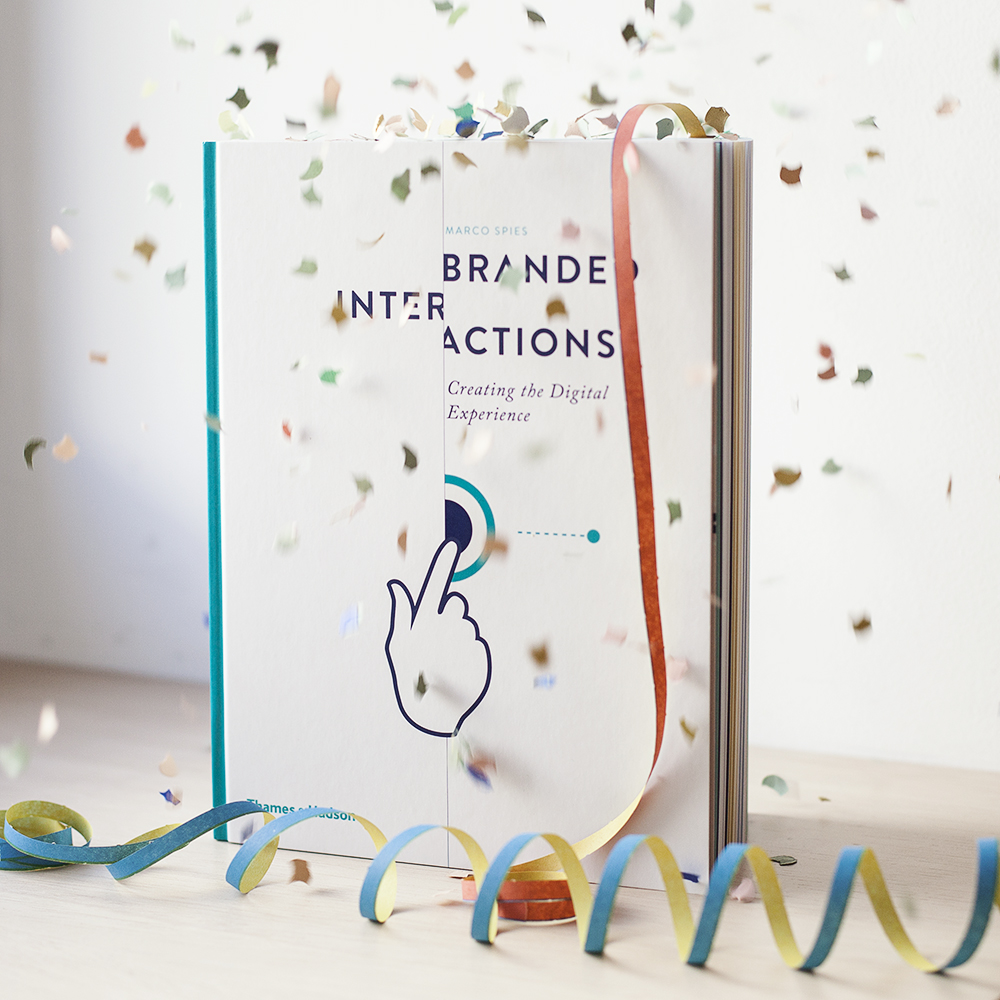
Want to learn more about the design process at think moto? You can read all about it in the book Branded Interactions by our founders. Also check out our project portfolio on thinkmoto.com to learn more about our work.

Meet the motos–Paul Krizsan

In our weekly series “meet the motos” we introduce you to our bright minds from the think moto team. We provide insights into different departments, everyday work life, tell you about exciting projects and dare to take a look into the future. Today: Paul Krizsan and the chatbot potential. 

👋 Hi Paul, glad you took the time. What are you doing at think moto?

I am a design hybrid with a focus on conversational design, i.e. voice and chatbots. My tasks range from visual design to UX design and JavaScript development. Currently I’m working on the rebranding of a German university, our award-winning chatbot Lui and various smaller projects, internally and externally.

That sounds exciting – how did you get into it?

I’ve been involved with technologies and new ways of interaction for quite some time now. My journey has taken me via virtual reality to bots, among other things. The latter in particular is currently undergoing a very exciting development. Previously still considered unreliable, poor customer support and small chat windows in the lower right corner, they now enable new touchpoints for customers to be played with emotionally and also visually.

“Chatbots today make it possible to play on new touchpoints emotionally and also with powerful imagery and storytelling.”

Paul Krizsan

What role do you think chatbots will play for companies in the future? And what do you see as your task?

There are already some brands that have successfully integrated chatbots into their customer journey. Be it in the area of customer service, in customer retention or, as happened with our chatbot Lui, in new customer acquisition. All these examples show that chatbots can already play a significant role. In addition, chatbot technologies are getting better and better. We are currently observing this with our preferred bot platform  Cognigy.AI. I therefore assume that in the future, more and more companies will rely on chatbots to reach their customers individually and interactively with brand character.

In this context, I see my task primarily in developing chatbots that create real added value for the customer, but also for the company. In addition, when developing chatbots at think moto, we make sure that the personality of the chatbot goes hand in hand with the attributes of the brand. For this purpose, we at think moto have developed various tools, such as so-called “bot filters”. With the bot filters, we ensure that the personality and tone of voice of the chatbot reflect the brand essence.

Sounds like a lot of work – What does a normal day look like for you?

Our days always start at 9:30 a.m. with a little agency-wide standup, through which you get a good insight into ongoing topics and projects, even if you’re not directly involved. After that, it’s either direct meetings and presentations or my email correspondence for me. Most mornings are more about collaborative tasks, while in the afternoon I can then focus on my topics.

Group of people sitting around an office conference room table in discussion.

How do you structure yourself and what are your tips for everyday work?

I’m a fan of consistent lunch breaks and take time for that between 12 and 1 pm. After that, it’s off to concrete creative, technical or strategic thinking work and smaller joint reviews until closing time, which is around 7 pm.

What makes think moto special for you?

Besides lovely colleagues, the biggest benefit is the customer selection. There is always something interesting and exciting to throw yourself into. Sometimes you have to hold back 😉

If you had to describe yourself, what three hashtags would you use?

#mountainbike #tech #indie

Which film has influenced you the most?

Spike Jonze’s Her (2013) is definitely partly responsible for my current fascination with conversational design and personalization through user interaction.

Finally, how would you describe think moto in three hashtags?

#creative #young #curious

Thanks, Paul!

Do you have specific questions about chatbots? Then visit our page on this topic at thinkmoto.de/chatbots.

Meet The Coaches–Benjamin Apfelbaum

Benjamin Apfelbaum is a communications trainer and freelance creative from Berlin. From October 31, Benjamin will be passing on his extensive knowledge of presentation and storytelling as a coach in his two-day intensive course Story Meets Design at the think moto Academy. But we’d rather let the charismatic stage man introduce himself…

👋 Hi Benjamin, please describe yourself in no more than five hashtags.

enthusiasm #stories #ramp #energy

What inspires you? What drives you?

Inspiring people, myself included. That means discovering new things and also constantly rediscovering yourself, pushing and trying new things. And islands. Islands are the best.

Can you briefly tell us something about your career? How did you get to where you are today?

I started as a designer in 2000 and over the years I’ve taken on more and more conceptual and strategic issues. I have always enjoyed presenting in any form. In particular, I found pitches for clients terrific. Later, when I was responsible for larger and larger teams, I was incredibly happy when I could help and watch people grow. Almost two years ago, I decided to get my business trainer license and have been working as a freelance consultant and trainer ever since.

“After all, all theoretical knowledge doesn’t help you if you can’t apply it under time pressure.”

Benjamin Apfelbaum

What can people learn from your training?

In one sentence. You learn how to present better and have fun at the same time. A bit more: You learn what makes a good presentation – and how to get there. From understanding briefings, to developing ideas, to being convincing in front of an audience. What is incredibly important to me: Always based on understandable exercises and methods that can be used in day-to-day business. All theoretical knowledge is of no use if you can’t apply it under time pressure.

Can you give us a must-have tip or an absolute no-go for presentations in advance?

All right 😉 Must-have tip: If you don’t do dress rehearsals before presentations, you shouldn’t be surprised when things don’t work. Time pressure or not.
Absolute no-go: Mega-full PowerPoint slides and then reading everything off.

How did you hear about the think moto Academy? How did the collaboration come about?
I bought the first issue of Branded Interactions years ago and worked with it a lot – that’s how I heard about think moto. When I heard on LinkedIn that Marco and Katja had founded the Academy, I simply wrote to them. We met for a coffee, hit it off and now we’re working together.

If people want to know more about you, where is the best place to search?
Either on www.benjamin-apfelbaum.com. Alternatively, you can just meet me for a coffee 😉 .
You can also find out more about Benjamin’s course “Story Meets Design” at the think moto Academy.

Adobe 99U Conference: What I took back to the office

Welcome to the creative future

The time has come — I (Isabel Hillenbrand) am on the way to my first design conference in New York. Having secured an Airbnb apartment conveniently close to the venue that is the Lincoln Center, the way to the conference is luckily not much of a challenge.
So, despite jet lag, I make it to the opening on time and even have time to grab a coffee and some fruits in the bustling Alice Tully Hall lobby. Much-needed energy for a long and exciting day to come.

This year’s overarching topic is ‘The Creative Future’, relating to our hope for what’s next: a world in which every creative is empowered and equipped to enforce values like empathy, curiosity and purpose.

The conference experience has already started a couple of weeks before the actual event when all participants received a neat pin that picked up the topic and increased the anticipation even more— stating ‘I have seen the future’.
It is a tribute to a souvenir from the 1939–1940 New York World’s Fair where visitors exiting the ‘Futurama’ pavillion could proudly claim ‘I have seen the future’.

So here I am, sitting in the packed Starr Theater at Alice Tully Hall —
a concert venue at Broadway and West 65th Street in Midtown Manhattan that is part of the larger Lincoln Center. Together with 1,000 fellow designers, marketers, engineers, educators and artists among others, I am ready to explore two days of leadership, design, collaboration, productivity and more. All talks will be original, none has been given before.

“There are events around the world where creatives like you are told about technologies coming to take your jobs. This isn’t one of them.”

Will Allen, VP Community Products at Adobe
Alice Tully Hall lobby — photo by Ryan Muir for 99U

How to make the future bright

Below I share my takeaways of the following two days of keynotes, master classes and workshops that are everything from being entertaining to thought-provoking and inspiring.

Day 1

The first speaker of this year’s 99U is Dr. Vivienne Ming, who co-founded Socos Labs, an independent think tank that explores the future of human potential and the influence of AI on it. Alongside an insight into her latest brainchilds like a technological brain support to stimulate human thinking, she underlines the role of human creativity in the context of the increasing possibilities in the field of AI: In this day and age, it is even more important to be brave enough to truly explore new shores and share one’s unique vision as this will remain an essential advantage of the human being for the foreseeable future. She appeals strongly to our courage — to put it above the fear of losing our jobs if we want to achieve real change.

“Artificial intelligence is fundamentally a tool and you’re the artists. It is a huge mistake to think AI will solve our problems. But taking creative people that know how to explore the unknown and have the courage to do what they think is right, that is fundamentally what creativity is about.”

Dr. Vivienne Ming, Co-Founder & Executive Chair at Socos Labs

The key message of the next speaker, Zach Lieberman, the co-founder of the School for Poetic Computation that teaches students how to use code as a medium for poetry and art, is to constantly look for opportunities in which we can learn and grow — and help others do the same.

“The key to creativity is finding a way to listen to yourself.”

Zach Lieberman, Co-founder of School for Poetic Computation
Audience during Lieberman’s talk — photo by Ryan Muir for 99U

Zach Lieberman is followed by Kyle T. Webster, a Design Evangelist at Adobe. He makes a point stressing how we entertain our minds from morning to night with ever more screen time although boredom is a blessing and a key driver of creativity — a means to unlock the place where creative ideas come from. “We are so bad in being bored. We have to allow ourselves the time and space for boredom. What if we perceive boredom as a blank canvas for our mind?” are some of his central statements.

“We can’t control our subconscious, but we can create the circumstances where our subconscious comes into play.”

Kyle T. Webster, Design Evangelist at Adobe
Kyle T. Webster on the main stage — photo by Ryan Muir for 99U

Next, IDEO’s Tim Brown is interviewed by Courtney E. Martin about various design topics. In his opinion, it is the best time in history to be a designer.

Similar to Dr. Ming before, Brown also addresses the necessary creative confidence to go into the unknown as well as the necessity in our times to master the design of evolving products when iteration and a constant management of ecosystems comes into play. You can’t just design products and are done, ready to move on to the next project — there is no finite moment anymore. Speaking about ecosystems, he makes the comparison with natural ecosystems like rainforests that are diverse, complex and ever evolving.

In addition, he talks about that design is a team sport as well as politics. More ideas fail in organizations than from market rejection so that getting a great idea through the maze is equally important as coming up with the idea in the first place. In this respect, he mentions that mastery in design largely means mastering people and organizations. You have to design for the organization that is the vehicle, for example by creating real experiences as soon as possible instead of bland PowerPoint slides.

Towards the end of the interview, Brown speaks about the necessary ethics of design work – at the same time warning that if you only care about not creating any sort of harm for anyone, you will never create something new. “The thing about new ideas is that they’re like a fragile new species. They have to live for awhile before they flourish. If they get killed before that, they don’t have a chance to flourish,” he says. Instead, we need a system or agreement to make sure we don’t do intentional harm.

“That confidence to leap into the unknown is a form of mastery.”

Tim Brown, CEO & President of IDEO

Kat HolmesDirector UX Design at Google and Founder of Mismatch.design, takes the opportunity to speak about inclusive design and how it can be a catalyst for design as it opens up your thinking. “What if there is no average, no normal?” she asks. She tells us to always ask what is missing in one’s design and what changes for all users when moving from a human to a digital experience for example. “Disability is no health condition but a mismatch — a mismatched interaction between the features of a person’s body and the features of the environment they live in,” Holmes says. “Don’t expect people to match your design. It should be the other way around.”

“What if there was no such thing as normal? How would we proceed in our design?”

Kat Holmes, Director UX Design at Google & Founder of Mismatch.design
Kat Holmes on the main stage —  photo by Ryan Muir for 99U

In the following talk, Joel Beckerman, Founder, Composer and Producer at Man Made Music, makes us aware that a lot of designers simply forget about sound although it is the experience dimension to which users respond most quickly. “If you’re afraid of a horror movie, don’t close your eyes, close your ears,” he tells us. Therefore Beckerman encourages us to practice better storytelling by using music and sounds and also to keep in mind the reaction you want to create with an experience in a given environment. Can you imagine the beeping sounds in hospitals to promote health and well-being?

“When the sound doesn’t match the visuals, your brain believes your ears first.”

Joel Beckerman, Founder, Composer & Producer at Man Made Music

In the afternoon, I attend a high-energy workshop run by Disney’s former Head of Innovation & Creativity, Duncan Wardle.

Following the title ‘Blue Sky Thinking: Where Revolutionary Ideas Come From’, Wardle speaks about how to spark creativity and come up with new ideas as well as how to share them with your team and the client in a sucessful way.

He shares the story behind the Disney MagicBand — a plastic bracelet in use at Walt Disney World Resort that provides a way for the system to connect data to guests. “At the start of its development, the central question was ‘How can we avoid standing in lines?’ and not ‘How can we raise profit by 3%?’” Wardle says. “Start by embedding new solutions deeply in and financial success will follow.”

Speaking about ideation, Wardle encourages us to get into a subconscious state, something that usually doesn’t happen in the office, to encourage playfulness and to regularly break out of our daily habits. Doing things differently every time allows us to access a fresh mind for creative ideas.

Another approach to thinking beyond the usual patterns is the involvement of naive experts — to have an outsider in the room in the form of a person from a different country or industry, who asks the ‘stupid’ questions and brings in new possibilities for solutions. Similarly, he recommends to list all the rules of a challenge and challenge them by asking ‘What if these rules didn’t apply? What would our possibilities be?’.

In an attempt to create an open, positive space for sharing new ideas,
Wardle reminds us of preferring the phrasing ‘Yes, and …’ over the use of
‘No, because …‘ to transfer a concept from ‘my/your idea’ to a group idea and also to grow infant ideas that are still very rough and by no means fully fleshed out yet.

When a new idea is born, Wardle always captures it in a few full sentences right away to avoid not remembering important details the next day.

Presenting the results to clients, he is a big fan of creating an environment with no barriers such as a table as well as of putting the presentation up on all four walls and taking the client for a walk around the room — turning the presentation into a conversation.

Photo by Duncan Wardle
Visual workshop recording — drawing by Lisa Rothstein

The subsequent master class is entitled ‘Gathering and Presenting Design Research’ and is hosted by Paige Bennett, a Design Researcher at Dropbox.

She shares ways to communicate your research results to turn the larger team into advocates of our findings. “Your findings must be able to live on without you as their guardian,” she says. Exhibit pop ups in central office locations, collaterals like fun stickers with key results as well as an informal ‘brown bag’ Q&A session over lunch or a coffee are all proven formats to get attention and buy-in from people outside of the core research team.

In addition, Bennett suggests to share intentions and results early and continuously during the process, using formats like a ‘What to expect and not to expect’ summary, dispatches from the field, theme progression insights as well as a highlight reel in the end.

Day 2

My second day starts with a master class on ‘Designing Tomorrow, Better’ with Brian CollinsHe is the founder of COLLINS that was named as one of the companies transforming the future of brand building by Forbes.

Collins states that “Companies are no longer in competition with each other. They’re in competition with the future itself.” However, we shouldn’t be fighting against the future and all the change it brings, but create a chosen future with maximum love. “The opposite of courage is not cowardice but conformity,” he says.

In this context, he speaks about recent work of his company that attempts to actively shape the future with meaning — engaging Spotify listeners, building a LEED-certified gas station for BP that educates about environmental impact and conservation or a radically new lip balm shape for the skin care brand EOS.

When it comes to execution, Collins mentions the importance of team collaboration as well as courage in visual design that is of particular significance in today’s times in which design finds its way into all processes. ”Create bold design systems that open up possibilities instead of closing them down,” he tells us.

Alice Tully Hall lobby — photo by Ryan Muir for 99U

The following workshop on ‘Presenting Bold Ideas’ is held by Irene Pereyra from Anton & Irene (Anton is sick that day).

Irene shows us how to prepare for and thrive in any presentation and distills her recommendations down to ten commandments:Be comfortable in your body (Relaxation excercises help!)Be comfortable with silence (Smile!)Be strategic about when you present (Not before or after lunch!)Work on your confidence (55% of what is remembered is body language!)Get rid of filler words (Choose silence instead!)Structure your content like an hourglass (Presenting is storytelling!)Learn not to rely on visual aids (Be ready to present without any slide!)Practice, practice practice (Practice!)Invite feedback from your team (Do they disconnect at ay point?)Smile, and learn to enjoy being the center of attention (You rock!)

Opening slide of the ‘Presenting Bold Ideas’ workshop by @antonandirene

In the afternoon, Giorgia Lupi, Information Designer and Partner at Pentagramshows us how to make data more consumable and meaningful by the use of design. She is looking forward to a time when data-driven design is replaced by design-driven data. The examples of her work for the ‘Data Wall’ at the Starbucks Reserve Roastery in Milan and for ‘Bruises’ — a project on the impact the illness of a child has on its family — illustrate how data vizualisation has the power to evoke empathy and also personal relevance, especially when music is added for an extra effect. “There is a world of unexplored, small, and intimate data that we never see,” she tells us.

“Our world is random and messy. Collecting data does not make it more perfect or more controllable.”

–Giorgia Lupi, Information Designer & Partner at Pentagram

Next, Anna Pickard from Slack talks about what it means to make your brand human — a goal most brands strive for today. Her key message is to make people feel seen and not to underestimate the value that a heartfelt error message or a “You’re doing great!” tweet might have. “It’s not about pretending to be human; it’s about finding the moments when you can connect with people,” she says. You have to show a two-way empathy, meeting the people where they are, and also bring the people behind the product to the fore. In addition, she tells us to put the voice of the brand in everyone’s hand instead of having a strict guide. In the end, it’s all about being clear, concise and human.

“Words have never mattered more. A single word can elevate something or it can change your perception. Even if it’s just your own perception.”

Anna Pickard, Head of Brand Communications at Slack
Anna Pickard on the main stage — photo by Ryan Muir for 99U

Eventually, Michael Ventura, Founder and CEO of the brand strategy and design practice Sub Rosa, highlights the importance of a holistic empathy throughout teams to make them better at their job. He tells us that empathy goes beyond being nice or compassionate but that it brings versatility to the process, knowing when to ask and when to listen, and that it should be accompanied by the will to really find out new truths. “It’s going to slow things down before it speeds things up,” he says. However, it will show positive results in the form of less rework, more sales as well as happier customers in the long run.

“Empathy requires attention and commitment. Be brave, because this isn’t something everybody’s willing to do. But if you are willing to do it, you will see change.”

 Michael Ventura, Founder & CEO, Sub Rosa

Summary

Looking back on two days full of inspiration, there are several themes and thoughts that were repeatedly addressed or that I particularly remember for other reasons:

Look into the future with a positive state of mind that curiously involves today’s technological developments instead of fighting them and use your capacities that machines can’t imitate so quickly — your unique creative vision as well as the creation of authentic, human relations with consumers.Show versatile empathy and find out about the whole self of consumers by practicing deep listening and observation in a trustful setting, meeting them where they are and being open to really discover something new.Use the power of your team and create an open, positive and supportive atmosphere where people stimulate each other’s thinking and build on the ideas of other team members to come up with the best results possible.Bring out unique ideas by allowing yourself undisturbed time to let your thoughts wander and break out of routines regularly, be bold enough to share your ideas with the world and think of ways that make it easiest for other people to fully understand them.

More than ever, creativity today demands courage. Let’s be brave and make the creative future bright by taking control of our tomorrow!

Want to design the future with us?

think moto is a digital design consultancy based in Berlin, Germany.
You are planning an innovation project? Let us know!

Quo vadis, Logo?

„Ein Logo ist dann gut, wenn man es mit dem großen Zeh in den Sand kratzen kann“, formulierte Kurt Weidemann, Gestalter des Logos der Deutschen Bahn, seinen Anspruch an ein gelungenes Logo.

Die Ausstellung „LOGO. Die Kunst mit dem Zeichen“, die derzeit im Museum für Konkrete Kunst in Ingolstadt läuft, geht unter anderem den Kriterien nach, an denen sich ein Logo messen lassen muss. Vor allem aber beschäftigt sie sich mit dem Logo als Bindeglied zwischen Kunst, Grafikgestaltung und Design. Gezeigt werden Archivfunde, Werbemittel und Verkaufsobjekte, Leuchtkästen und grelle Wandarbeiten.

Continue reading “Quo vadis, Logo?”

Design kommunizieren – ein neues Erscheinungsbild für Paul Camper

Die aktuelle Ausgabe der Page zum Thema „Design kommunizieren“ berichtet über unseren strategischen Markenprozess für das Start-up „Paul Camper“ – dem Airbnb für Wohnmobile.

Für Paul Camper entwickelten wir ein neues Erscheinungsbild, das ihre neue, progressive Ausrichtung anhand des Online-Portals und einiger weiterer Touchpoints verdeutlicht. Vom Discovery Workshop, über die neue Positionierung bis hin zum Moodboard entwickelten wir gemeinsam mit dem Berliner Team ihre neue Marke. Der Artikel beleuchtet insbesondere die Relevanz der strategischen Entscheidungen für den Designprozess und was Fingerspitzengefühl für die Beziehung zwischen Agentur und Kunde bedeutet.

Mehr zum Thema „Design kommunizieren“ in der aktuellen Ausgabe der Page (6 | 2017).


Travel booking in the age of the service economy

Recently we’ve been deepening our design sprint skills whilst working for flyiin, a start up co-founded by Marco. For those who don’t know flyiin yet: with it’s roots in the airline industry, the start up is pushing the boundaries of customer experience in flight booking. During four design sprints we’ve been developing flyiin’s user experience in close corporation with their technical product development team in Budapest. As a designer I was impressed by the positive dynamics of the mutual influence of design and product development. Our common objective is to provide you with a hassle free trip that starts when checking for flights.

Continue reading “Travel booking in the age of the service economy”

Ich, der Praktikant und unser neuer Geschäftsführer

Seit vier Monaten bin ich als Praktikant bei think moto und vor einigen Tagen hat Norman als Geschäftsführer am Schreibtisch hinter mir Platz genommen. Norman ergänzt neben Katja und Marco die Geschäftsführung als Managing Director und betreut damit die Bereich Beratung, Finanzen und Technologie. Ich als Agentur-Neuling und Berufseinsteiger habe mich dafür interessiert, was es heißt die Geschäfte zu führen und wer mein neuer Nachbar ist.

1.) Du sitzt quasi seit 4 Wochen hinter mir, und ich habe doch wenig Ahnung davon was du machst – außer flotte Sprüche bei unserem allmorgendlichen Stand Up zu klopfen. Was bedeutet es die Geschäfte zu führen?

Das ist also Deine Wahrnehmung von mir, nach gut vier Wochen. Auch interessant. Demnächst habe ich auch noch Urlaub. Dann ist mein Image wohl perfekt. Spaß bei Seite. Die Geschäfte zu führen bedeutet grundsätzlich die Verantwortung für das Wohl der Firma und der Mitarbeiter zu haben. „Das Wohl“ heißt dann wiederum konkret: persönlich, inhaltlich und wirtschaftlich dafür zu sorgen, dass wir gemeinsam a) Spaß und b) Erfolg haben.

2.) Und wie hast du es so weit gebracht?

(Lacht!) Das kommt auf die Perspektive an, wie weit ‘weit’ ist. Ich wollte immer Kommunikationsprodukte begleiten und herstellen. Aktuell passiert viel im Spannungsfeld digitale Produkte, Identitäten und Services. Mich hat das interessiert. Und ich war – das wird mir zumindest nachgesagt – bereit, etwas mehr Zeit, Liebe und Energie aufzubringen. Darüber hinaus, und vielleicht ist das entscheidend, hatte ich immer Menschen um mich, die mich gefördert und gefordert haben. Die an mich geglaubt haben. Ob das bei PUBLICIS war, oder bei Neue Digitale in Frankfurt oder bei Hi-ReS! in Berlin. Immer gab es Menschen, und zwar auf allen Ebenen, die ausgerechnet mit mir etwas reißen wollten. Ich habe mehrfach erlebt, dass dann etwas Besonderes und Großes entstehen kann.

3.) Soweit ich das verstehe, verschaffst du uns mit deiner Arbeit Arbeit. Um mich herum sitzen viele kreative Köpfe mit Visionen. Welche Vision verfolgst du? Wo soll es hin gehen?

Der letzte rauchende Dinosaurier unserer Zeit hat mal gesagt: „Wer Visionen hat, soll zum Arzt gehen.“ Vielleicht ist das ein wenig hart ausgedrückt vom Visionär Helmut Schmidt. Ich halte es so: Ideen und Visionen sind nichts, wenn man diese nicht auf die Straße – heißt umgesetzt – bekommt. Dann bleiben es schlicht Dinge, denen man hinterher trauert. Meine Stärke liegt darin, Ideen und Visionen nachvollziehen und mitgehen zu können. Und vor allem, eine Idee bzw. Lösung zu entwickeln, wie man diese umsetzen und zum Leben erwecken kann. In diesem Sinne ist meine Vision, Leuten zu helfen, Visionen Wirklichkeit werden zu lassen.

4.) Kommt es vor, dass Du nicht arbeitest? Und was machst Du dann?

Ruhephasen sind extrem wichtig, dass musste ich schon feststellen. Ich habe eine kleine Familie. Meine Tochter ist 7 Jahre und kommt im September in die 3. Klasse. Wow! Das ist natürlich jemand, der immer etwas für mich zu tun hat. Außerdem schraube ich mit meinem Bruder an Motorrädern. Vor gut 4 Monaten bin ich mein erstes Classic-Enduro mit einer KTM GS 80 Baujahr 79 gefahren. Mehr Spaß pro Kilometer kann man nicht haben. Senior advice: Sollte jeder machen!

Erwischt man Herr Rockmann (alias Rocketman) dabei wenn er das Steuerrad verlässt, um sich einen frischen Filterkaffe zu brühen, endet dies immer wieder in einer auflockernden und erheiternden Begegnung. Norman erweckt als neuer Geschäftsführer ganz den Eindruck, dass es trotz strukturiertem Agenturalltag an schönen Sommermorgen wie diesem, Zeit und Raum für Begegnung gibt.

Über die musikalische Untermalung bei der Arbeit lässt sich mit Ihm auch quatschen, denn sein Musikgeschmack trifft zumindest meinen… http://www.last.fm/de/user/rockmann


Offf Festival 2016 – Recap

Let’s feed the future!
Wir gehen langsam auf die Mitte des Jahres zu und der Hunger nach frischem Input wird immer größer. Da trifft es sich gut, dass das Offf Festival dieses Jahr wieder seine Türen für Kreative aus aller Welt öffnete und unter dem Motto »Let’s feed the future!« zur Tafel bat. Die Besucher erwartete ein All-you-can-eat-Buffet der Inspiration vom Feinsten, welches sich über 3 Tage erstreckte und für jeden Geschmack etwas zu bieten hatte. Neben Geschmacksgaranten wie Paula Scher, Ideo und Timothy Goodman gab es auch viele Speaker, deren Namen man vielleicht noch nicht kannte, deren Arbeiten man aber schon desöfteren über den Weg gelaufen ist. Continue reading “Offf Festival 2016 – Recap”

Designpraktikum bei think moto – ein Rückblick

1. August bis 15. Januar – wo sind bloß die letzten sechs Monate geblieben?

Für das Praxissemester habe ich den Weg von der Hochschule für Gestaltung Schwäbisch Gmünd nach Berlin zu think moto gefunden, bevor demnächst mein Auslandssemester in Australien startet.

Mein Anspruch an das Praktikum war, Gestaltung aus einer anderen Perspektive als in den ersten vier Semestern im Studiengang Kommunikationsgestaltung zu betrachten. Die digitale Gestaltungsrichtung bei think moto war meine Herausforderung.  Continue reading “Designpraktikum bei think moto – ein Rückblick”

Cookie Consent with Real Cookie Banner