What Is a Branded AI Assistant?

AI assistants are becoming a central interface between companies and customers.
This shift is changing how brands need to be designed.

For a long time, brands were primarily created for communication: websites, campaigns, and visual identities. Today, brands are increasingly beginning to interact. AI assistants answer questions, explain products, and help people make decisions. As a result, something fundamental is changing: the brand begins to speak. Once a brand communicates through AI, it is no longer just a piece of technology.
It becomes part of the brand experience.

This development marks a turning point in brand management. While digital transformation previously meant optimizing brands visually for screens, the new challenge is to design brands for conversation. This is not a gradual extension of existing design practices. It is a categorical shift: from representation to interaction, from presentation to dialogue.

The Shift in Digital Brand Management

Over the past decade, digital products have already transformed how brands operate. Websites became platforms. Products became services. Interfaces became the central place where brand experience happens.

Now, AI assistants introduce a new type of interface that differs fundamentally from previous ones: they communicate not only visually, but linguistically. With large language models, companies can develop assistants that answer complex questions, guide users through services, or support decision-making. What previously required menus, forms, or support hotlines can now happen through natural language conversations. An insurance customer, for example, no longer needs to navigate a complex form. Instead, they simply describe their situation. The assistant understands, asks follow-up questions, and explains available options.

Conversational interfaces do something that traditional digital interfaces rarely achieved: they communicate in natural language, with all the nuances that come with it — tone, attitude, and personality. This fundamentally changes the role of brands. Because as soon as an organization participates in conversations, it reveals how it thinks, argues, and explains. The brand is no longer just seen.
It is experienced — in every answer, every clarification, and every explanation.

The Blind Spots in Current AI Implementations

Many organizations currently see AI assistants mainly as technical tools to improve efficiency: automating support, reducing costs, or answering frequently asked questions. From an operational perspective, this makes sense. From a brand perspective, however, something critical is often overlooked.

An AI assistant represents the company. It explains products, responds to criticism, and helps users navigate complex decisions. In many cases, it speaks on behalf of the brand more frequently and more directly than any marketing campaign ever could. If this voice is not deliberately designed, inconsistencies quickly emerge that fragment the brand identity.

Different assistants speak differently. Responses vary depending on prompt engineering. Brand positioning becomes diluted because different teams maintain different knowledge bases. In visual brand management, consistency is standard practice: typography, color systems, and imagery are carefully defined. In conversational interfaces, this level of discipline is often missing. As a result, brands that spent years building a coherent visual identity suddenly speak with ten different voices.

Branded AI Assistants: A Conceptual Framework

This is where the concept of the Branded AI Assistant comes in. A Branded AI Assistant is more than a chatbot connected to a knowledge base. It is a deliberately designed interaction layer between an organization and its users. Several dimensions shape this layer:

Brand Voice: The assistant does not simply provide correct answers. It communicates in the characteristic tone of the brand. If a brand is precise and factual, the assistant responds with clear, structured explanations. If it is approachable and encouraging, it explains patiently, asks clarifying questions, and provides helpful context.

Conversational UX: Dialogues are systematically designed rather than left to chance. This means anticipating conversation flows, identifying common user intentions, and developing consistent response patterns.

Personality: The assistant has a defined way of reacting. How does it deal with uncertainty? How does it admit mistakes? How proactively does it guide the user? This personality is not a property of the AI model. It is a design decision.

Governance: Knowledge sources must be curated. Responses need to be reviewed regularly. Prompts should be maintained systematically. This requires clear responsibilities and processes — similar to content governance in traditional digital ecosystems.

Interaction Principles: Rules define how the assistant explains, guides, and responds. Does it answer immediately or ask clarifying questions first? How much context does it provide? How direct are its recommendations?

Only when these dimensions are consciously designed does a technical solution become a true brand interface. The difference is comparable to the one between a functional website and a carefully crafted digital brand experience.

A diagram of the five core dimensions of a branded AI Interface interacting to reinforce each other, and form a coherent brand interface.

Practical Implications for Organizations

As AI assistants become brand interfaces, responsibilities inside organizations begin to shift. Brand teams, design teams, and product teams need to collaborate more closely than before. Questions that used to be either technical or creative now become both:

How does the brand explain complex topics? How does it respond to criticism or complaints? How actively does it guide users through decisions? How does it handle uncertainty? These questions shape the brand experience just as strongly as typography, color systems, or visual language. Therefore, they increasingly belong inside brand systems, not only in technical architectures or prompt libraries.

In practical terms, companies must define their AI voice as systematically as their visual identity. They need to establish conversational design as a discipline. And they must create governance structures that ensure consistent AI interactions across touchpoints.

First Steps for Companies

Organizations that want to design AI assistants strategically can begin with several concrete steps. First, define the AI voice. This translates the brand’s tone into conversational rules. It does not mean simply copying existing brand guidelines, but clarifying how the brand sounds in direct dialogue. How much personality does it express? How formal or accessible is it?

Second, establish conversational design as its own discipline. This includes designing dialogue flows, defining typical conversation patterns, and developing interaction principles. Unlike traditional user interfaces, the focus here is not on click paths but on conversation dynamics — including the uncertainty and variability that natural language brings.

Equally important is the establishment of clear governance structures. Responsibilities for content, prompts, and knowledge sources must be defined. Processes for regular review and optimization should be implemented. Finally, AI interactions should be integrated into existing brand systems, alongside design systems, brand guidelines, and product design frameworks.

Only through this structured approach does a technical tool become a consistent part of the brand — an interface that not only works, but strengthens the brand identity instead of fragmenting it.

A New Design Challenge for Brands

For a long time, brands were primarily designed for visibility — to attract attention, create recognition, and establish visual differentiation. In the age of AI, brands are increasingly designed for interaction. This is more than a technological development. It represents a fundamental expansion of what brand management means.

Visual identity defines how a brand looks. Conversational identity defines how it thinks, argues, and communicates. It reveals how an organization understands problems, structures decisions, and deals with complexity. In this sense, Branded AI Assistants are not just a new technology interface. They are a new medium of brand management.

The challenge for organizations is not to leave this new dimension to chance, but to design it as deliberately as every other aspect of their brand. Not only defining how a brand looks — but how it speaks.

Die Design- und Techtrends zum Verlieben

Es ist wieder einmal an der Zeit in die Glaskugel zu schauen und eine kleine Zeitreise in das kommende Jahr zu unternehmen. Mit dem Wechsel in das Neue – sowieso vielversprechendere – Jahr wird gewöhnlich viel evaluiert, (selbst)reflektiert, geschrieben und noch mehr vorgenommen. Im Internet wimmelt es wieder nur von den fragenden oder weissagenden Posts und Berichten: “Was kommt 2016 so auf uns zu?” In unserer Branche haben jedenfalls folgende drei Trends meine Aufmerksamkeit gewonnen.

Unser langjähriger Kunde relayr startet erneut eine digitale Offensive und wir dürften wieder behilflich sein. Mehr bald auf diesem Kanal!

Außerhalb des Monitors

Der technische Fortschritt kennt keinen Schlaf. Und so zählen inzwischen Wearables die entgangen Schritte und unseren Puls, die Sonntags-Joggingroute wird bis zum Knochenmark analysiert. Intelligente Kühlschränke kaufen ein, der Filmanbieter weißt besser als wir selbst, welche Filme zu uns passen und die treuen Smartphones informieren uns in welcher Bar nicht gerade nur 19-jährige tanzen. Ich frage mich, ob man morgen auf seinen Lieblingsjoghurt verzichten werden muss, weil der Fitness-App-Meilenstein nicht erreicht wurde?

All diese Technologie sammelt jedenfalls riesengroße Mengen an Daten, die jetzt noch intensiver in die Dienstleistungs- und Designstrategien einfließen werden. Die beidseitige Beziehung zwischen Nutzer und Unternehmen wird gestärkt werden. Viele lebens- und gesundheitsoptimierende Dienstleistungen, digitale persönliche Assistenten, oder lernfähige Algorithmen (Amazon, IBM’s Watson Developer Cloud), werden noch schlauer. Dabei wird die verbale Interaktion (Siri, Cortana, Google Now, Facebook M) dominanter in unseren Alltag. In diesem Jahr werden Erfahrungen und entry points außerhalb des Bildschirms an Gewicht gewinnen. Und noch mehr personalisierte Dienstleistungen und kontextbasierte Angebote werden uns erwarten!

Unsere neue working-culture mit stand-ups, warm-ups, meetups und digitalen Austauschkanälen ermöglicht uns flexibel zu agieren und lustig zu bleiben!

Arbeitnehmer – die neuen Helden von morgen

Die Generationskluft und die wachsende Ungleichheit unter den Arbeitnehmern, der VW- und der FIFA-Skandal oder das immer ethischer werdende Konsumverhalten. Das sind nur einige Dinge, die uns den vergangenen Jahren beschäftigten und es auch weiterhin tun werden. Im Vordergrund stehen nun Employee Experience und Employee Empathy. Viele kleine und große Unternehmen beginnen, das interne Branding und die Wahrnehmung der Unternehmenskultur in der Öffentlichkeit besonders behutsam zu pflegen. Dabei entstehen viele Fragen: Welche Auswirkungen sind in der Talente-Landschaft der nächsten Jahre zu erwarten? Wie sind eigentlich die Erwartungen der verschiedenen Generationen in einem Unternehmen zu meistern? Als Folge kann man erwarten, dass auf vertraute Abläufe besser geachtet wird. Überhaupt wird die interne Kultur eine zunehmend wichtigere Rolle spielen, sich dadurch aber auch deutlich verbessern. Von digitalen Intra-Kommunikationslösungen, über datenbasierte Personalmarketing-Strategien bis hin zum Trend der letzten Jahre, wo Mitarbeiter selbst zu Marken-Botschafter werden. Digitales Storytelling könnte dabei eine effektive Technik sein, um Austausch und Bindung besser zusammenzubringen.

Wir unterstützen unseren Kunden Haufe im Ausbau der internen Design-Leistungen seit mehreren Jahren.

Design hat eine neue Heimat

In erfolgreichen Unternehmen genießt Design heute einen hohen Stellenwert. Digital-Design und Design-Thinking sind eingezogen und einbezogen. Große Organisationen haben verstanden, wie ihnen Design ermöglicht, hochwertigere Produkte zu anzubieten, Wettbewerbsvorteile zu sichern und sich zu differenzieren. Konzerne haben in den vergangenen Jahren eine Menge in Design investiert. Und das ist gut so. Durchdesignte digitale Produkte, durchdachte Inkubatoren, Design-Labs und UX Offices sind das neue Omen. In 2016 werden auch mittelständische Unternehmen diese tiefgreifende Transformation ins Digitale wahrnehmen und von ihr profitieren. Design geführte Prozesse durchbrechen Silos und schaffen aus einzelnen Produkten Plattformen. Sie gestalten schlaue, zukunftsweisende Ökosysteme. Unterstützt auch die oberste Etage im Unternehmen das digitale Denken, kann Innovation bewusst vorangetrieben werden.

Mehr Details zu den wichtigsten Design- und Tech-Trends 2016 findet Ihr hier: Gartner, Page, Trend Watching, Fjord, Frog, Landor, Smart Insights, t3n, InVision

Tone of Voice—How a Brand Sounds and Speaks: A Successful Brand Personality Always Has a Distinctive Tone of Voice

—Den Artikel gibt es hier auch auf Deutsch

Brands are successful if they are recognizable and provide outstanding user experiences at all touch points. Be it website, social media, point of sale, marketing or virtual assistant—only a clearly defined brand personality ensures a consistent and unique encounter between brand and user at all times. This always includes the tone of voice.

The tone of voice defines how we speak and write as a brand. Through the tone of voice, the brand’s personality becomes verbally tangible. So it’s not about what we say or who we talk to—but how.

Since the tone of voice is never separate from the brand, it is essential to first define the brand personality.

Discovery_Workshop
What would the brand be like as a person? One of the questions we ask in the discovery workshop

Uncover the Brand in the Discovery Workshop

If the brand was a person, how would it behave and be perceived by others? This is one of the crucial questions we regularly ask in our discovery workshops. Later, in the define phase, we reflect the insights gained this way by writing a prose text about the brand, assigning it the behavioral attributes contained therein. 

In a next step, we group them into clusters and select the strongest attribute from each. From these key attributes, we derive the brand filters that we use to align look-and-feel, user guidance, and tone of voice. The twelve archetypes serve as further orientation because they have been linked to emotions and characteristics for generations. They are therefore useful when it comes to defining the role of a brand—in the market, towards competitors and, above all, towards customers.

Brand Archetype Card Deck by think moto
Archetype Card Deck by think moto

The Linguistic Dimension

In the discovery workshop, we also have the participants define an initial framework for the tone of voice. Five dimensions serve as guiding principles for determining the respective degree of seriousness, formality, emotionality, approachability, and the level of deference to the brand or product. This framework provides an initial feel for the language style. When developing the brand strategy, we later check whether it is congruent with the brand filters and readjust if necessary.

Taking a Refined Approach

Let’s assume that a brand is primarily empowering, smart, and sophisticated as a person—how would these characteristics express themselves in writing and speaking? We specify this using the brand filters in the language principles.

For example, a sophisticated tone of voice means that we communicate eloquently, with our speech fluid and full of elegance. This way, we emphasize the premium character of the brand, but do so in such a nonchalant way that it never comes across as showy.

We then clarify how these language principles affect sentence structure and word choice in particular and illustrate this with the help of concrete examples. To do this, it is a good idea to run the customer’s existing texts through the defined language filters, rephrase them, and explain how and why something was changed.

Use the Right Tone to Add Persuasive Power to Your Corporate Identity

Linguistic principles and guidelines are an important addition to the CI portal of any brand. Along with the existing visual brand basics, they ensure that the brand acts and communicates according to its personality. 

We all know about the power of words. When used cleverly and coherently, they sharpen the brand and make it both real and accessible.

Learn more about brand personalities and our branding approach in the standard work on digital brand management: “Branded Interactions. Living Brand Experiences for a New Era”.

Wir suchen Verstärkung!

Wir suchen engagierte Talente mit Leidenschaft für Design, digitale Kultur, Stilsicherheit und einem hohem Anspruch an ihre Arbeit als Gestalter, Berater und Entwickler.

Habt Ihr Interesse großartige Projekte zu stemmen, gemeinsam an einem Strang zu ziehen und Eure Visionen mit uns zu verwirklichen?

Ab sofort suchen wir nach einer/einem Projektmanager und einer/einem Senior UX Designer für unsere digitalen Projekte!Weitere Jobangebote findet Ihr unter www.thinkmoto.de/jobs/

Wir freuen uns auf Deine Bewerbung!


Quo vadis, Logo?

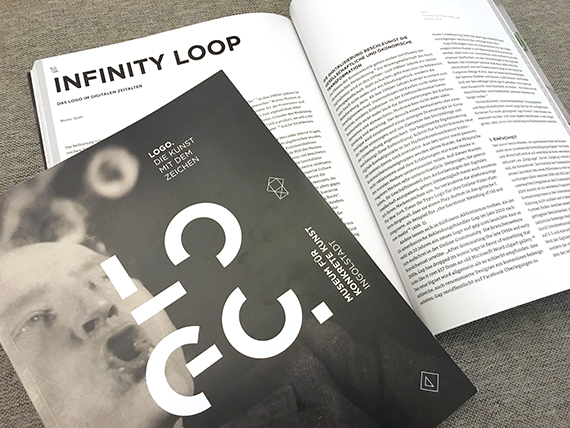
„Ein Logo ist dann gut, wenn man es mit dem großen Zeh in den Sand kratzen kann“, formulierte Kurt Weidemann, Gestalter des Logos der Deutschen Bahn, seinen Anspruch an ein gelungenes Logo.

Die Ausstellung „LOGO. Die Kunst mit dem Zeichen“, die derzeit im Museum für Konkrete Kunst in Ingolstadt läuft, geht unter anderem den Kriterien nach, an denen sich ein Logo messen lassen muss. Vor allem aber beschäftigt sie sich mit dem Logo als Bindeglied zwischen Kunst, Grafikgestaltung und Design. Gezeigt werden Archivfunde, Werbemittel und Verkaufsobjekte, Leuchtkästen und grelle Wandarbeiten.

Continue reading “Quo vadis, Logo?”

Mobile First Responsive Design

Das Thema Responsive Design ist kein neues Thema. Wir haben schon darüber auf unseren Blog besprochen und sogar seit über ein Jahr die think moto Webseite kann sich durch ihrem Adaptative Design auf allen Geräten anpassen.

Responsive, Adaptive, Mobile First – was heißt das eigentlich?

Das Thema Responsive Design ist längst kein Neuland mehr. Wir haben es bereits vor einiger Zeit auf unserem Blog diskutiert, und seit über einem Jahr ist auch die think-moto-Website so gestaltet, dass sie sich dank ihres adaptiven Designs auf alle gängigen Geräte und Bildschirmgrößen anpasst – vom Smartphone bis zum großen Desktop-Monitor.

Trotzdem sorgt die Vielfalt an Begriffen immer wieder für Verwirrung: Responsive Design, Adaptive Design, Mobile First – klingt ähnlich, meint aber nicht ganz dasselbe. Ein kurzer Überblick.

Responsive Web Design

Responsive Web Design beschreibt einen Ansatz, bei dem sich das Layout einer Website fließend an unterschiedliche Bildschirmgrößen anpasst. Möglich wird das durch drei zentrale Prinzipien:

Fluide Grids, die sich proportional zur Bildschirmgröße verändern

Flexible Bilder und Medien, die auf jeder Auflösung korrekt dargestellt werden

Media Queries, mit denen bestimmte Layout-Anpassungen an definierten Breakpoints ausgelöst werden

Das Ergebnis: Ein und dieselbe Website reagiert dynamisch auf das jeweilige Endgerät – ohne separate Versionen für Mobile, Tablet oder Desktop.

Adaptive Design

Adaptive Design geht noch einen Schritt weiter. Hier geht es nicht nur um unterschiedliche Bildschirmgrößen, sondern um den Kontext, in dem eine Website genutzt wird. Wichtige Prinzipien sind:

Ubiquity & Context – Nutzer sind überall und in sehr unterschiedlichen Situationen unterwegs

Flexibilität – Interfaces müssen geräteunabhängig funktionieren; heutige Breakpoints sind morgen schon veraltet

Performance – Wir haben im Schnitt nur wenige Sekunden Aufmerksamkeit. Performance ist deshalb nicht nur eine technische, sondern auch eine gestalterische Aufgabe

Progressive Enhancement – Inhalte und Funktionen werden je nach Gerät und Fähigkeiten des Systems sinnvoll erweitert

Future-Friendly – Je kompatibler ein System heute ist, desto größer ist die Chance, dass es auch morgen noch funktioniert

Adaptive Design denkt also stärker in Systemen und Nutzungsszenarien als nur in Pixelbreiten.

Mobile First

Mobile First ist weniger eine Technik als eine Denkweise:
Man beginnt das Design bewusst mit der mobilen Nutzungssituation – und erweitert es dann für größere Bildschirme.

Warum das sinnvoll ist:

Reichweite: Rund drei Viertel der Weltbevölkerung besitzen ein Smartphone, die meisten nutzen es als primären Internetzugang.
Fokus: Wenn man nur wenig Platz hat, muss man sich auf das Wesentliche konzentrieren – Kerninhalte und zentrale Funktionen.
Innovation: Mobile Geräte bieten neue Möglichkeiten wie Touch, Sensoren oder Geolocation, die ganz neue Nutzungserlebnisse erlauben

Mobile First zwingt dazu, radikal nutzerzentriert zu denken – und nicht vom großen Desktop herab.

Fazit:
Responsive Design sorgt dafür, dass Layouts flexibel reagieren.
Adaptive Design stellt sicher, dass Systeme kontext- und zukunftsfähig bleiben.
Mobile First definiert, wo wir mit dem Denken anfangen sollten: beim Nutzer in der Tasche.

Zusammen bilden sie die Grundlage für zeitgemäße digitale Produkte.

Die Job Story Writing Class bei think moto

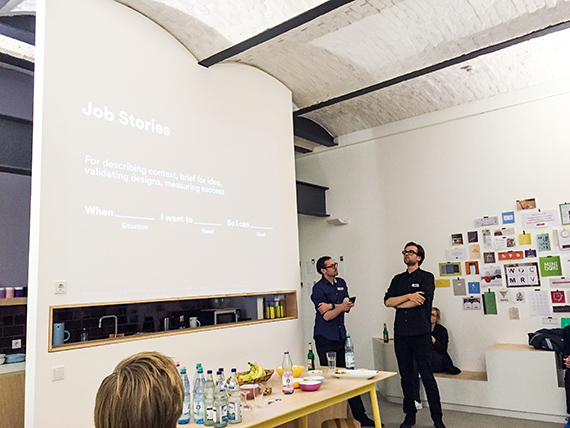
Gestern haben wir das ‪#‎JTBD‬ Meetup gehostet und einen interessanten Einblick in das Jobs to be done Framework bekommen. Nach einer kurzen Einführung in die Methode ›Job Stories‹ ging es dann auch schon direkt in die Anwendung und Teamarbeit. Wer mehr über diese Methode erfahren möchte, kann sich diesen Artikel von Alan Klement anschauen! https://medium.com/…/replacing-the-user-story-with-the-job-…

Continue reading “Die Job Story Writing Class bei think moto”

We wish you a happy day! – Der think moto Strategietag

Ich bin Lena, studiere Kommunikationsgestaltung an der Hochschule für Gestaltung Schwäbisch Gmünd und verbringe mein fünftes Semester hier in Berlin. Seit August bin ich Praktikantin bei think moto. Am vergangenen Montag hatte ich die Chance, bei unserem think moto Strategietag dabei zu sein. Continue reading “We wish you a happy day! – Der think moto Strategietag”

5 years think moto

Vergangenen Freitag haben wir 5 Jahre think moto mit vielen tollen Menschen gefeiert und gleichzeitig unsere neuen Räumlichkeiten in der Saarbrücker Straße eingeweiht. Wir hatten die tolle Band Kuya live vor Ort, die mit ihrem Mix aus Soul und Bossa Nova eine ganz besondere Atmosphäre geschaffen haben. Für Spaß und Unterhaltung sorgte unsere Giphy Installation, mit der man via Hashtags animierte GIFs auf unsere Wand projizieren konnte. Das sorgte für viele absurde und lustige Partyvisuals. Vielen Dank an alle die da waren und mit uns gefeiert haben! Die nächste Party kommt bestimmt!  Continue reading “5 years think moto”

Beitrag von Marco Spies in der Page über CD-Manuals

In der aktuellen Ausgabe der Page gibt es ein 4-seitiges Feature von Marco in der Rubrik ›Werkzeug‹. Thematisch geht es um den Umgang mit Corporate-Design-Manuals im digitalen Zeitalter. Denn im Zuge digitaler Touchpoints wird die Authentizität von Marken wichtiger als ihre visuelle Erscheinung, denn Brüche in der Gestaltung werden eher verziehen als im Service. Heutzutage sind Regeln gefragt, die die generelle Unternehmenshaltung und die Markenbedeutung definieren. Weg von klassischen Styleguides, hin zu einem schlankeren Regelwerk für Mitarbeiter. Als Beispiel dient das Markenportal der Messe Frankfurt, welches wir konzipiert und gestaltet haben. Dort finden Nutzer neben den Grundregeln auch Best Practice Beispiele von bereits existierenden Anwendungen. Diese sollen inspirieren und anregen, auch selbst weiter zu denken.

Continue reading “Beitrag von Marco Spies in der Page über CD-Manuals”

Cookie Consent with Real Cookie Banner