Adobe 99U Conference: What I took back to the office

Welcome to the creative future

The time has come — I (Isabel Hillenbrand) am on the way to my first design conference in New York. Having secured an Airbnb apartment conveniently close to the venue that is the Lincoln Center, the way to the conference is luckily not much of a challenge.
So, despite jet lag, I make it to the opening on time and even have time to grab a coffee and some fruits in the bustling Alice Tully Hall lobby. Much-needed energy for a long and exciting day to come.

This year’s overarching topic is ‘The Creative Future’, relating to our hope for what’s next: a world in which every creative is empowered and equipped to enforce values like empathy, curiosity and purpose.

The conference experience has already started a couple of weeks before the actual event when all participants received a neat pin that picked up the topic and increased the anticipation even more— stating ‘I have seen the future’.
It is a tribute to a souvenir from the 1939–1940 New York World’s Fair where visitors exiting the ‘Futurama’ pavillion could proudly claim ‘I have seen the future’.

So here I am, sitting in the packed Starr Theater at Alice Tully Hall —
a concert venue at Broadway and West 65th Street in Midtown Manhattan that is part of the larger Lincoln Center. Together with 1,000 fellow designers, marketers, engineers, educators and artists among others, I am ready to explore two days of leadership, design, collaboration, productivity and more. All talks will be original, none has been given before.

“There are events around the world where creatives like you are told about technologies coming to take your jobs. This isn’t one of them.”

Will Allen, VP Community Products at Adobe
Alice Tully Hall lobby — photo by Ryan Muir for 99U

How to make the future bright

Below I share my takeaways of the following two days of keynotes, master classes and workshops that are everything from being entertaining to thought-provoking and inspiring.

Day 1

The first speaker of this year’s 99U is Dr. Vivienne Ming, who co-founded Socos Labs, an independent think tank that explores the future of human potential and the influence of AI on it. Alongside an insight into her latest brainchilds like a technological brain support to stimulate human thinking, she underlines the role of human creativity in the context of the increasing possibilities in the field of AI: In this day and age, it is even more important to be brave enough to truly explore new shores and share one’s unique vision as this will remain an essential advantage of the human being for the foreseeable future. She appeals strongly to our courage — to put it above the fear of losing our jobs if we want to achieve real change.

“Artificial intelligence is fundamentally a tool and you’re the artists. It is a huge mistake to think AI will solve our problems. But taking creative people that know how to explore the unknown and have the courage to do what they think is right, that is fundamentally what creativity is about.”

Dr. Vivienne Ming, Co-Founder & Executive Chair at Socos Labs

The key message of the next speaker, Zach Lieberman, the co-founder of the School for Poetic Computation that teaches students how to use code as a medium for poetry and art, is to constantly look for opportunities in which we can learn and grow — and help others do the same.

“The key to creativity is finding a way to listen to yourself.”

Zach Lieberman, Co-founder of School for Poetic Computation
Audience during Lieberman’s talk — photo by Ryan Muir for 99U

Zach Lieberman is followed by Kyle T. Webster, a Design Evangelist at Adobe. He makes a point stressing how we entertain our minds from morning to night with ever more screen time although boredom is a blessing and a key driver of creativity — a means to unlock the place where creative ideas come from. “We are so bad in being bored. We have to allow ourselves the time and space for boredom. What if we perceive boredom as a blank canvas for our mind?” are some of his central statements.

“We can’t control our subconscious, but we can create the circumstances where our subconscious comes into play.”

Kyle T. Webster, Design Evangelist at Adobe
Kyle T. Webster on the main stage — photo by Ryan Muir for 99U

Next, IDEO’s Tim Brown is interviewed by Courtney E. Martin about various design topics. In his opinion, it is the best time in history to be a designer.

Similar to Dr. Ming before, Brown also addresses the necessary creative confidence to go into the unknown as well as the necessity in our times to master the design of evolving products when iteration and a constant management of ecosystems comes into play. You can’t just design products and are done, ready to move on to the next project — there is no finite moment anymore. Speaking about ecosystems, he makes the comparison with natural ecosystems like rainforests that are diverse, complex and ever evolving.

In addition, he talks about that design is a team sport as well as politics. More ideas fail in organizations than from market rejection so that getting a great idea through the maze is equally important as coming up with the idea in the first place. In this respect, he mentions that mastery in design largely means mastering people and organizations. You have to design for the organization that is the vehicle, for example by creating real experiences as soon as possible instead of bland PowerPoint slides.

Towards the end of the interview, Brown speaks about the necessary ethics of design work – at the same time warning that if you only care about not creating any sort of harm for anyone, you will never create something new. “The thing about new ideas is that they’re like a fragile new species. They have to live for awhile before they flourish. If they get killed before that, they don’t have a chance to flourish,” he says. Instead, we need a system or agreement to make sure we don’t do intentional harm.

“That confidence to leap into the unknown is a form of mastery.”

Tim Brown, CEO & President of IDEO

Kat HolmesDirector UX Design at Google and Founder of Mismatch.design, takes the opportunity to speak about inclusive design and how it can be a catalyst for design as it opens up your thinking. “What if there is no average, no normal?” she asks. She tells us to always ask what is missing in one’s design and what changes for all users when moving from a human to a digital experience for example. “Disability is no health condition but a mismatch — a mismatched interaction between the features of a person’s body and the features of the environment they live in,” Holmes says. “Don’t expect people to match your design. It should be the other way around.”

“What if there was no such thing as normal? How would we proceed in our design?”

Kat Holmes, Director UX Design at Google & Founder of Mismatch.design
Kat Holmes on the main stage —  photo by Ryan Muir for 99U

In the following talk, Joel Beckerman, Founder, Composer and Producer at Man Made Music, makes us aware that a lot of designers simply forget about sound although it is the experience dimension to which users respond most quickly. “If you’re afraid of a horror movie, don’t close your eyes, close your ears,” he tells us. Therefore Beckerman encourages us to practice better storytelling by using music and sounds and also to keep in mind the reaction you want to create with an experience in a given environment. Can you imagine the beeping sounds in hospitals to promote health and well-being?

“When the sound doesn’t match the visuals, your brain believes your ears first.”

Joel Beckerman, Founder, Composer & Producer at Man Made Music

In the afternoon, I attend a high-energy workshop run by Disney’s former Head of Innovation & Creativity, Duncan Wardle.

Following the title ‘Blue Sky Thinking: Where Revolutionary Ideas Come From’, Wardle speaks about how to spark creativity and come up with new ideas as well as how to share them with your team and the client in a sucessful way.

He shares the story behind the Disney MagicBand — a plastic bracelet in use at Walt Disney World Resort that provides a way for the system to connect data to guests. “At the start of its development, the central question was ‘How can we avoid standing in lines?’ and not ‘How can we raise profit by 3%?’” Wardle says. “Start by embedding new solutions deeply in and financial success will follow.”

Speaking about ideation, Wardle encourages us to get into a subconscious state, something that usually doesn’t happen in the office, to encourage playfulness and to regularly break out of our daily habits. Doing things differently every time allows us to access a fresh mind for creative ideas.

Another approach to thinking beyond the usual patterns is the involvement of naive experts — to have an outsider in the room in the form of a person from a different country or industry, who asks the ‘stupid’ questions and brings in new possibilities for solutions. Similarly, he recommends to list all the rules of a challenge and challenge them by asking ‘What if these rules didn’t apply? What would our possibilities be?’.

In an attempt to create an open, positive space for sharing new ideas,
Wardle reminds us of preferring the phrasing ‘Yes, and …’ over the use of
‘No, because …‘ to transfer a concept from ‘my/your idea’ to a group idea and also to grow infant ideas that are still very rough and by no means fully fleshed out yet.

When a new idea is born, Wardle always captures it in a few full sentences right away to avoid not remembering important details the next day.

Presenting the results to clients, he is a big fan of creating an environment with no barriers such as a table as well as of putting the presentation up on all four walls and taking the client for a walk around the room — turning the presentation into a conversation.

Photo by Duncan Wardle
Visual workshop recording — drawing by Lisa Rothstein

The subsequent master class is entitled ‘Gathering and Presenting Design Research’ and is hosted by Paige Bennett, a Design Researcher at Dropbox.

She shares ways to communicate your research results to turn the larger team into advocates of our findings. “Your findings must be able to live on without you as their guardian,” she says. Exhibit pop ups in central office locations, collaterals like fun stickers with key results as well as an informal ‘brown bag’ Q&A session over lunch or a coffee are all proven formats to get attention and buy-in from people outside of the core research team.

In addition, Bennett suggests to share intentions and results early and continuously during the process, using formats like a ‘What to expect and not to expect’ summary, dispatches from the field, theme progression insights as well as a highlight reel in the end.

Day 2

My second day starts with a master class on ‘Designing Tomorrow, Better’ with Brian CollinsHe is the founder of COLLINS that was named as one of the companies transforming the future of brand building by Forbes.

Collins states that “Companies are no longer in competition with each other. They’re in competition with the future itself.” However, we shouldn’t be fighting against the future and all the change it brings, but create a chosen future with maximum love. “The opposite of courage is not cowardice but conformity,” he says.

In this context, he speaks about recent work of his company that attempts to actively shape the future with meaning — engaging Spotify listeners, building a LEED-certified gas station for BP that educates about environmental impact and conservation or a radically new lip balm shape for the skin care brand EOS.

When it comes to execution, Collins mentions the importance of team collaboration as well as courage in visual design that is of particular significance in today’s times in which design finds its way into all processes. ”Create bold design systems that open up possibilities instead of closing them down,” he tells us.

Alice Tully Hall lobby — photo by Ryan Muir for 99U

The following workshop on ‘Presenting Bold Ideas’ is held by Irene Pereyra from Anton & Irene (Anton is sick that day).

Irene shows us how to prepare for and thrive in any presentation and distills her recommendations down to ten commandments:Be comfortable in your body (Relaxation excercises help!)Be comfortable with silence (Smile!)Be strategic about when you present (Not before or after lunch!)Work on your confidence (55% of what is remembered is body language!)Get rid of filler words (Choose silence instead!)Structure your content like an hourglass (Presenting is storytelling!)Learn not to rely on visual aids (Be ready to present without any slide!)Practice, practice practice (Practice!)Invite feedback from your team (Do they disconnect at ay point?)Smile, and learn to enjoy being the center of attention (You rock!)

Opening slide of the ‘Presenting Bold Ideas’ workshop by @antonandirene

In the afternoon, Giorgia Lupi, Information Designer and Partner at Pentagramshows us how to make data more consumable and meaningful by the use of design. She is looking forward to a time when data-driven design is replaced by design-driven data. The examples of her work for the ‘Data Wall’ at the Starbucks Reserve Roastery in Milan and for ‘Bruises’ — a project on the impact the illness of a child has on its family — illustrate how data vizualisation has the power to evoke empathy and also personal relevance, especially when music is added for an extra effect. “There is a world of unexplored, small, and intimate data that we never see,” she tells us.

“Our world is random and messy. Collecting data does not make it more perfect or more controllable.”

–Giorgia Lupi, Information Designer & Partner at Pentagram

Next, Anna Pickard from Slack talks about what it means to make your brand human — a goal most brands strive for today. Her key message is to make people feel seen and not to underestimate the value that a heartfelt error message or a “You’re doing great!” tweet might have. “It’s not about pretending to be human; it’s about finding the moments when you can connect with people,” she says. You have to show a two-way empathy, meeting the people where they are, and also bring the people behind the product to the fore. In addition, she tells us to put the voice of the brand in everyone’s hand instead of having a strict guide. In the end, it’s all about being clear, concise and human.

“Words have never mattered more. A single word can elevate something or it can change your perception. Even if it’s just your own perception.”

Anna Pickard, Head of Brand Communications at Slack
Anna Pickard on the main stage — photo by Ryan Muir for 99U

Eventually, Michael Ventura, Founder and CEO of the brand strategy and design practice Sub Rosa, highlights the importance of a holistic empathy throughout teams to make them better at their job. He tells us that empathy goes beyond being nice or compassionate but that it brings versatility to the process, knowing when to ask and when to listen, and that it should be accompanied by the will to really find out new truths. “It’s going to slow things down before it speeds things up,” he says. However, it will show positive results in the form of less rework, more sales as well as happier customers in the long run.

“Empathy requires attention and commitment. Be brave, because this isn’t something everybody’s willing to do. But if you are willing to do it, you will see change.”

 Michael Ventura, Founder & CEO, Sub Rosa

Summary

Looking back on two days full of inspiration, there are several themes and thoughts that were repeatedly addressed or that I particularly remember for other reasons:

Look into the future with a positive state of mind that curiously involves today’s technological developments instead of fighting them and use your capacities that machines can’t imitate so quickly — your unique creative vision as well as the creation of authentic, human relations with consumers.Show versatile empathy and find out about the whole self of consumers by practicing deep listening and observation in a trustful setting, meeting them where they are and being open to really discover something new.Use the power of your team and create an open, positive and supportive atmosphere where people stimulate each other’s thinking and build on the ideas of other team members to come up with the best results possible.Bring out unique ideas by allowing yourself undisturbed time to let your thoughts wander and break out of routines regularly, be bold enough to share your ideas with the world and think of ways that make it easiest for other people to fully understand them.

More than ever, creativity today demands courage. Let’s be brave and make the creative future bright by taking control of our tomorrow!

Want to design the future with us?

think moto is a digital design consultancy based in Berlin, Germany.
You are planning an innovation project? Let us know!

Visual power seeks identity–Impressions of CXI_19

Brick meets Brand

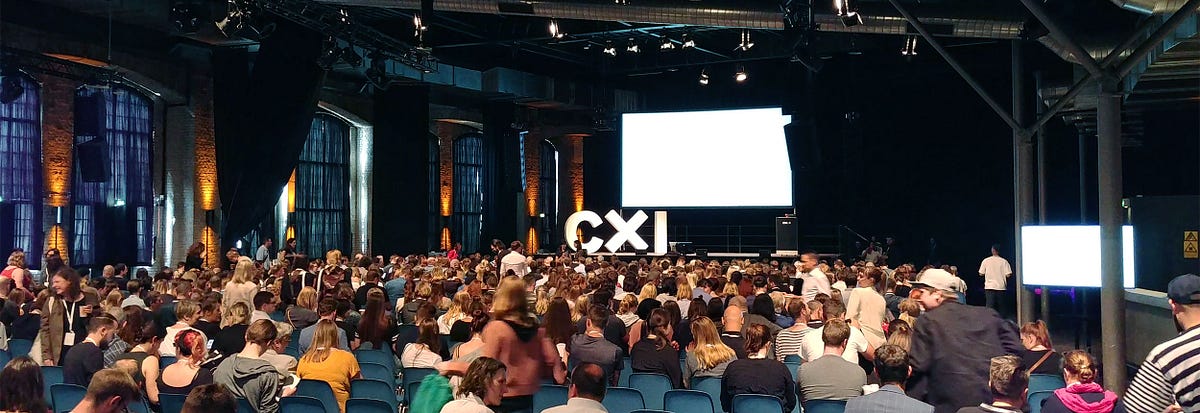
Now in its 11th year, Europe’s largest conference on corporate and brand identity is taking place. The venue for this prestigious event was once again the Bielefeld Lokschuppen, a building from the early 20th century with brick walls and a deeply industrial look.

The CXI is organized by the Fachhochschule Bielefeld, in particular the Faculty of Design. With this educational institution as the organizer, it is therefore hardly surprising that students are primarily represented in the registration and indeed in the audience.

Once again this year, six pairs of speakers and three-person constellations took to the stage to represent agencies and their clients in various brand projects. The aim was to create a unique, comprehensive picture of both parties involved in said projects. After all, otherwise you only get to hear from one side.

FOMO tv | Kurppa Hosk

The CXI_19 kicked off with the conference’s only international speakers. Swedish design agency Kurppa Hosk, represented by Thomas Kurppa, and Stockholm-based gallerist, artist, and jack-of-all-trades Jonas Kleerup shared the highly creative and nostalgic process of finding FOMO tv’s identity.

Kleerup’s idea of a video streaming platform on the topic of FOMO (Fear Of Missing Out) might be difficult to understand in its approach and of questionable relevance apart from the artistic approach, but the intensity and quality of the design left nothing to be desired. With impressive showreels of the brand-in-motion, a style reminiscent of VHS tapes and a flexible logo concept reminiscent of MTV’s myriad of logo variations, Kurppa Hosk overwhelmed the audience with visual power.

Kleerup’s idea of a video streaming platform on the theme of FOMO (Fear Of Missing Out) might be difficult to understand in its approach and of questionable relevance apart from the artistic approach, but the intensity and quality of the design left nothing to be desired. With impressive showreels of brand-in-motion, a style reminiscent of VHS tapes and a flexible logo concept reminiscent of MTV’s myriad of logo variations, Kurppa Hosk overwhelmed the audience with visual power.

To do so, Kurppa Hosk applied her own snowball-like design process to branding, approaching a finished brand gradually but with increasing speed and complexity. An interesting process, but more akin to the waterfall model than agile design, which made one wonder if this approach might be less suitable for more commercial projects due to inflexibility, at least on the outside.

Images published by CXI

Volks­wa­gen | think moto

We had the honor to be on stage with one of our clients again this year as an agency. Between late 2017 and mid-2018, we broke new ground and into new realities with Volkswagen.

To bring Generation X closer to the experience of car dealerships and shiny new cars, Volkswagen developed a series of applications for virtual reality and mixed reality. The basis of the applications was the possibility to bring different car models to the users in a playful and virtual way. The only thing missing was the smell of new cars.

The involvement of think moto started with the dissonance of many interaction patterns within these prototype-like applications. After all, no one had yet addressed the coherence of interactions across different realities. As a rule, there were hardly any applications that had to pass the test of brand conformity in both virtual reality and augmented reality. Our mission, therefore, was to create a unified pattern library to keep existing and future extended reality applications in line with other Volkswagen digital products.

think moto

OSRAM Con­ti­nen­tal | KMS TEAM

When two people move in together, the household goods do not double. This was also the experience of Nadine Schian, Head of Communications, Marketing & Brand at OSRAM Continental. In a tough, three-year struggle, the joint venture between OSRAM and Continental built itself up on the basis of a technological partnership in the field of mobility lighting solutions and faced an important challenge in the process. As the brainchild of two down-to-earth and prestigious corporations, the task of finding its identity was either to follow in the footsteps of its parents or to break completely new ground.

This question was asked even before the actual founding of the joint venture, which for Vera Schnitzlein and the southern German agency KMS Team also meant: How do you build a brand without an existing company behind it? After all, nothing had been fixed yet, let alone signed.

Visually, therefore, basic elements of both brands were used. It was particularly important to find a color scheme for the colors that could stand alone but was derived from the parents.

For OSRAM Continental, however, the advantage of such an early start to finding an identity was above all that the corporation was able to launch on the first day after its official founding with around 1,500 employees on all continents and a fully developed, independent and expressive identity. A flying start for the young joint venture.

Images published by CXI

FC Bay­ern Mün­chen | Inter­brand

How do you tell an absolute Bayern Munich fan that his club’s favorite color is now yellow and green? You don’t. Philipp Mokrohs, the club’s lead brand strategist, and Alexandra Gövert of Interbrand told us about the problems of designing an incredibly emotional brand like the world’s most famous soccer club. In 2017, Gövert and her team were tasked with touching FC Bayern Munich’s identity and bringing it into the 21st century.

For a brand whose core values are all about tradition and heritage, change means putting on kid gloves for design. Major changes would have vehemently fallen victim to the emotions of millions and millions of fans, but at the same time Mokrohs reported a need for change. Evolution instead of revolution, was the motto.

The logo, for example, which hadn’t been touched in decades, was in desperate need of craft help and was first freshened up by Alexandra Gövert’s team. This was followed by the introduction of various key visuals, the gradient in the background, and the cut and contrast of fonts and images. In the end, it became clear that the company also needed its own typeface to ensure a consistent brand presence in the future. This way, Bayern Munich is not only secure on the pitch, but also on the web (and other touchpoints).

Images published by CXI

sip­ga­te | g31

Agile, lean and in sprints to success. That’s actually a good recipe, isn’t it? That’s what the Internet telephony provider sipgate and the small Düsseldorf agency g31 thought when they tackled the rebranding of sipgate. Before they got to that point, however, the two partners had already taken a turn.

When sipgate originally came to g31, the talk was of a brand refresh – not a complete rebranding with a new identity. A project that was to be tackled in the classic waterfall approach. After the guys and gals from g31 around Mats Kubiak and Paul Schoemaker had then locked themselves away for two months and worked out a concept to meet this requirement, it was time to present.

However, the concept presented did not seem quite right for Tim Mois and Tobias Ritterbach from sipgate. Instead, they wanted something completely new. To achieve this, they now relied on two-week sprints, lively exchanges and employee surveys. Thus, week by week, the company’s stale body with its dotcom look grew into a sleek bolide in black and white with colorful facets for the Internet telephony provider’s many different products.

The previously almost independent and not at all visually consistent products and sub-brands were now captured and merged into a whole via patterns, uniform logos and a holistic identity system.

Images published by CXI

DHL | Strich­punkt

After DHL had already completed a tough and elaborate redesign of the brand a few years ago, there was no question of allowing the logo, the colors or even the key visuals to be touched, brought on board Strichpunkt to give the yellow logistics brand new vigor.

Thick tomes of style guides, separate online portals for digital and print media, and a plethora of different layouts and touchpoints from airplane wrappings to advertising posters in the DHL branch, each with its own set of rules, had slowed down the logistics giant and now threatened to be unnecessary ballast for an agile future for DHL.

Strichpunkt recognized this quite correctly and worked to consolidate the visual components of the brand. A UI toolkit for developers now helps keep new digital products consistent across different devices and shortens development time enormously. The two heavily text-heavy and opaque Brand Portals became one with lots of images, examples and help. The font selection, which previously consisted of over a dozen typefaces, was replaced by the new house font “Delivery”.

But probably the most impressive result from Strichpunkt was the creation of a layout generator, via which every DHL employee can easily create brand-compliant digital and print publications and products thanks to templates and guidelines. Just fill in the text fields, select images from the online library and you have a print-ready PDF in the highest quality and conforming to the brand from the choice of colors to the spacing.

Strichpunkt made all these changes under the concept of simplification. There should be flexible and universal principles and elements of design that can be applied across all touchpoints. And this has definitely been achieved. Good job, Strichpunkt!

Image Courtesy of DHL

Reduce and Recycle

The presence of flexible identities and living brands was to be expected at CXI_19 and did not disappoint. A simplicity of rules, reusable patterns and visuals, and a break with the separation between digital and print are leading principles of brand building and development in today’s world and in the foreseeable future.

The days of 200-page brand manuals and pixel-perfect media guidelines are numbered. Today’s brands can adapt, grow and survive. The brand is dead, long live the brand.

think moto auf der iico 2014

Wenn jedes Jahr in Berlin die Web Week in vollem Gange ist, stellen die Experten der Digital Branche auf der iico Konferenz Lösungen für aktuelle Probleme vor und blicken gemeinsam über den Tellerrand. In diesem Jahr war auch Marco Spies als Sprecher eingeladen und zeigte, wie man mit dem Branded Interaction Design Ansatz interaktive Anwendungen, Produkte und Services konsequent aus der Marke heraus entwickelt. Außerdem hat er erstmals die BIxD-Canvas vorgestellt, die bei der Planung und der Gestaltung von digitalen Maßnahmen hilft.

Am 23. Mai ist Marco Spies als Sprecher auf der IA Konferenz in Berlin vertreten und spricht dort im Namen der Kunden: “Don’t shoot me, I’m only the customer.”

Storydrive Conference 2013

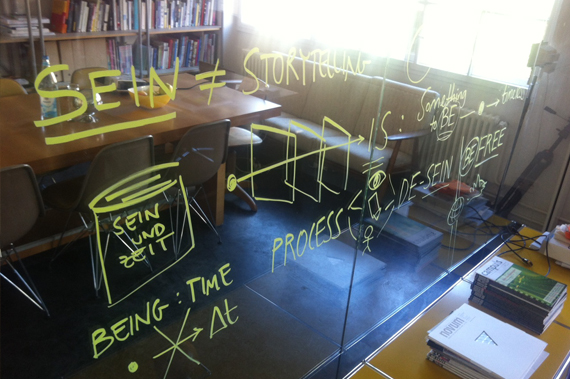
As a member of the German Designer Club (DDC), Marco was invited to take part in the Storydrive Conference in Beijing. The DDC was asked to give insights into storytelling in various design disciplines and media.

As words are the building blocks of stories, each speaker of the DDC chose one special word to explain storytelling in his field. In his talk, Marco Spies—co-founder of the design studio think moto and book author—talks about the meaning of the word SEIN (Being). This video was shown at the conference in Beijing.

Mehr Informationen:
Storydrive Conference
German Designer Club


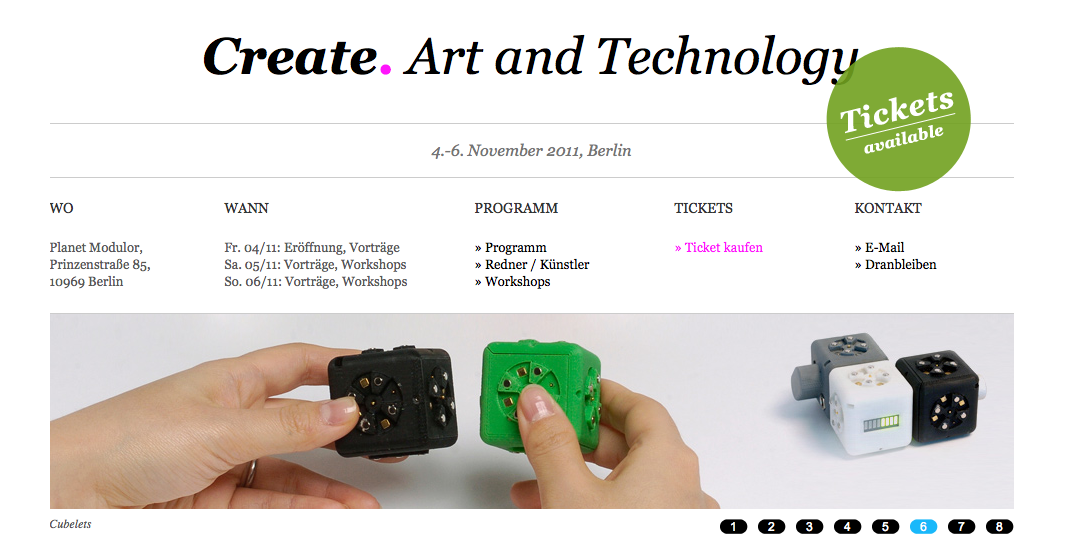
Create Art And Technology: 4. bis 6. November 2011

Vom 4. bis 6. November findet Berlin eine Konferenz für Elektronikfrickler jeder Couleur statt, die wir gerne als Sponsor unterstützen. Das ganze wird maßgeblich von Anton von Tinkersoup organisiert, was uns schon alleine Grund ist, dabei zu sein. Hier der Ankündigungstext… Continue reading “Create Art And Technology: 4. bis 6. November 2011”

Forget about mobile

Die IA Konferenz 2011 in München ist leider zu Ende. Die gute Nachricht: Dank dem Hype um iOS, iPhone, iPad, Appstore, Android und der Komplexität von “Mobile”, sind wir UX Designer gefragter denn je. Ich möchte nur einige Themen anreißen:

Mobile Only User –  Dont make people wait, until they get home (Barbara Ballard)

"The Trouble with context…" by Stephanie Rieger
“The Trouble with context…” by Stephanie Rieger

In Westeuropa sind wir mit dem Internet langsam aufgewachsen, vom 56k Modem über ADSL, UMTS bis zu LTE. Wir kennen das Internet von Zuhause und vom Smartphone. Das ist die eine Generation, aber es entwickelt sich zeitgleich eine neue Generation, die so genannten Mobile-Only User. 20% der Mobile User in den USA nutzen bzw. kennen das Internet nur von ihrem Smartphone, bei “Mobile Mums” sind es sogar bis zu 30% mehr. In China sollen es sogar bis zu 70% sein! In Afrika ist es noch extremer: Dort wurden teilweise Technologien wie Landlines (Festnetz) und (Internet) Computer komplett übersprungen. Festnetz und Computer hat es in den meisten Regionen Afrikas nie gegeben – geschweige denn Strom. Dafür aber Handys mit Akkulaufzeiten von bis zu vier Wochen. Seit einigen Jahren sogar vermehrt mit Internetanbindung. Was bei uns noch immer ein Wunschdenken ist, ist in Afrika Alltag und oft die einzige Möglichkeit Geld zu versenden bzw. zu erhalten: Mobile Payment per SMS.
Das bedeutet weiter gedacht, dass auch Mobile User Zugang zum kompletten Funktionsumfang eines Services haben müßen. Der User will “unterwegs” nicht nur sein Kontoauszug sehen, sondern auch Überweisungen aller Art machen können. Keine inhatlich abgespeckten Webseiten, keine Funktions reduzierten Apps und die Aussage: Zuhause am Computer kann er ja den “Rest” machen funktioniert in einigen Use Cases nicht mehr. Es ist die Balance zwischen: der User möchte auch mobil kompletten Funktionsumfang von der bekannten Webseite und wie viele Funktionen tun dem User gut. Simplify Function and Content?: Yes and No. Die meisten Insights kamen von Sabine Stoessel. Quellen folgen, sobald Ihre Folien online sind Continue reading “Forget about mobile”

IA Konferenz 2011 – Tag 1

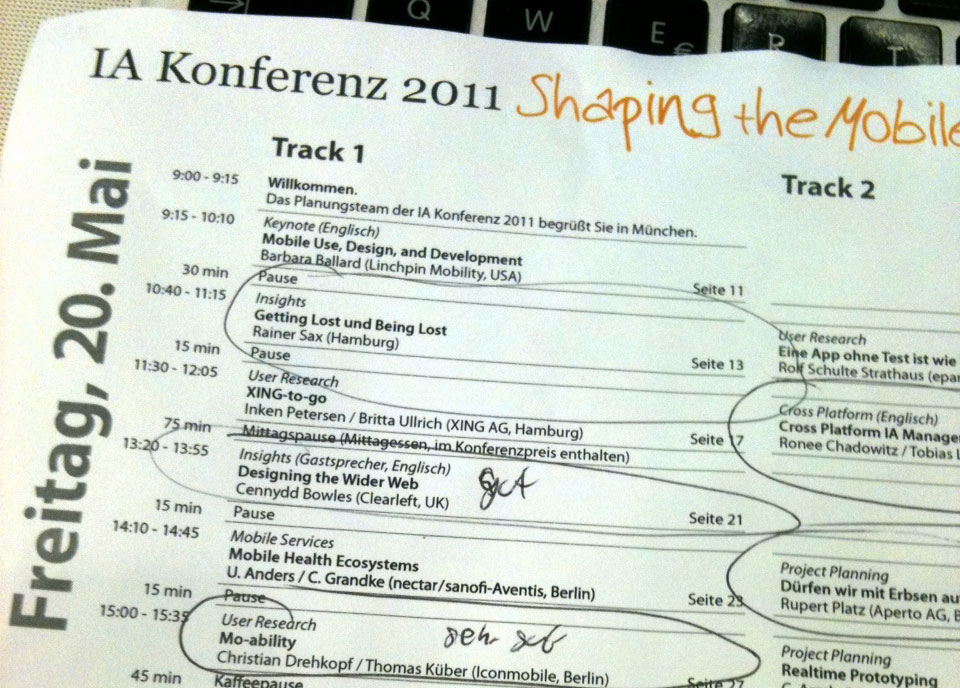
Der erste Tag ist vorbei, es gab ein paar spannende Vorträge und bisher super organisiert! Lob an das Planerteam. Verfolgt habe ich folgende Sessions

  • Mobile Use, Design, and Development – Barbara Ballard (Linchpin Mobility, USA)
  • Cross Platform IA Management – Rone Chadowitz / Tobias Limbach (UID GmbH, München)
  • Designing the Wider Web – Cennydd Bowles (Clearleft, UK)
  • Dürfen wir mit Erbsen auf den Elefanten zielen? – Rupert Platz (Aperto AG, Berlin)
  • Mo-ability – Christian Drehkopf / Thomas Küber (Iconmobile, Berlin)
  • Creative Workflow – von der Idee zur App – Charlotte Block / Alina Schlaier (denkwerk GmbH, Köln)
  • Mobile IXD – Nick Finck (Blue Favor, USA)

Insgesamt war es ein guter Tag, aber aus meiner Sicht mit relativ wenig neuen Insights. Die Konferenz versteht sich aber auch nicht als “Next” bzw. Tech/Web Konferenz, sondern mehr als “Austausch” Networking Konzepter-Konferenz mit einem guten Querschnitt aktueller Trends. Oder wie manche sagen: Als Klassentreffen der deutschen IAs. Die meisten Themen und Informationen (Selbst von Finck, Cennydd und Ballard) waren zwar nicht neu, aber sie bringen die aktuellen Trends sehr gut auf den Punkt. Ein paar interessante Stichwörter: Cross Channel, Mobile Behaviours, Mobile Commerce, Integrative Systeme, Real-time response, Multi-Screen, Mobile Pattern, Location Based und Mobile Only.

Von den paar hundert Konferenzteilnehmern haben sich nur fünf Studenten angemeldet. Eigentlich sehr schade, weil es die beste Gelegenheit für Studenten/Absolventen ist, direkt mit wichtigen Leuten zu sprechen. Das Studententicket ist mit 180,00€ viel Geld (für einen Studenten), aber Angesichts der Location und dem kompletten Catering (Essen und Getränke) ein wirklich fairer Preis. Bitte liebe Studenten, erscheint nächstes mal zahlreicher, ihr werdet es nicht bereuen. Die Jobtafel und die Aufforderung “We hire!” nach fast jeder Präsentation, zeigt den derzeit starken Bedarf an guten UX/Interaction Designern – wie bei uns! We hire, too! 🙂

Ich bin weiter gespannt und berichte inhaltlich die nächsten Tage darüber.

IA Konferenz – Shaping the Mobile Experience

Von Freitag bis Samstag findet die IA Konzepter-Konferenz zum Thema “Shaping the Mobile Experience” im Sheraton Arabella Park Hotel in München statt. Wir werden  natürlich auch Vorort sein und  freuen uns über spannende Vorträge und Sprecher. Was sind Eure Favourit Sessions? Hier ein Auszug von der Webseite

…. War effektive Nutzung des Webbrowsers bisher meist an ein Desktop- oder Notebook-Computer gekoppelt, erleben wir gegenwärtig den Durchbruch des mobilen Web als Massenphänomen.

Die Masse von Mobiltelefonen mit hochauflösenden Multi-Touch Displays, mit denen der Markt überschüttet wird, sowie erschwingliche Daten-Flatrates bilden die Basis neuer Nutzungserlebnisse und neuer Mehrwert-Nischen, die nicht nur für „Early Adopters“ sondern für breite Zielgruppen erschwinglich und zugänglich werden. Location-Based Services, schon seit Jahren eher eine Nischenanwendung, erfahren durch die verbesserten mobilen Devices einen Durchbruch.

Welche Konsequenzen hat diese „Revolution“ für die Konzeption von Diensten und Services? Welche Patterns der Informationsarchitektur solcher Services sind erfolgversprechend? Wie kann Transparenz für immer abstraktere und voraussetzungsreichere Services geschaffen, wie können Zugangshürden niedrig und Lernkurven flach gehalten werden? Wie kann der Nutzer den Überblick darüber behalten, welche Daten wohin übertragen und gespeichert werden und für wen diese sichtbar sind?

All dies sind Fragen, die Konzepter, Informationsarchtekten und User Experience Designer implizit oder explizit zu beantworten haben, sobald sie sich der Herausforderung der Konzeption mobiler Services nähern. Zudem müssen Aspekte wie wirtschaftlicher Erfolgsanspruch, Zugänglichkeit, Usability, Nachhaltigkeit, Nützlichkeit und Mobile Privacy in einem Balanceakt in Einklang gebracht werden.…


We minimize and compensate our CO2 consumption.

Cookie Consent with Real Cookie Banner